
As coding becomes an increasingly valuable skill for students, many parents wonder: How can I support my child’s interest in programming if I do not have a computer science background? However, parents do not need to know how to code to play an important role. By creating the right learning environment, encouraging exploration, and helping students find meaningful projects and resources, these parents can help their children develop their technical skills and confidence.
If you’re a parent whose child is interested in coding, this article will help you become their biggest cheerleader and facilitator as they step into the world of tech.
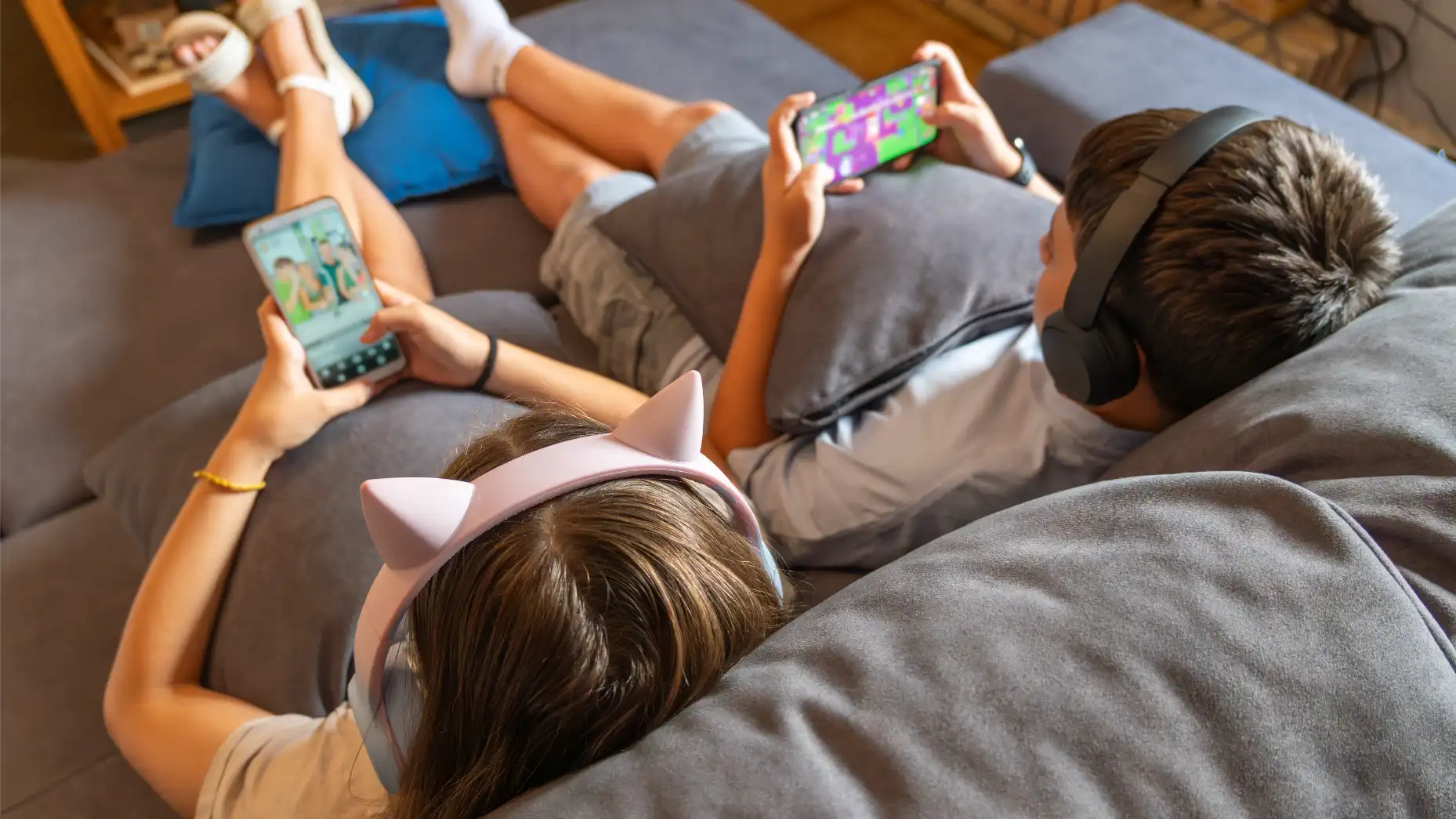
A 2025 JAMA study following U.S. youth found that how children use their devices may matter more than simply how many hours they spend on them. The researchers found that problematic or addictive patterns of social media and mobile phone use were associated with greater mental health risks over time, while total screen time alone did not show a consistent relationship with outcomes. 50.4% of teens ages 12 to 17 now report four or more hours of daily screen time outside of schoolwork.
For parents, this shifts the conversation beyond simply trying to reduce screen time. The more meaningful distinction is what children are actually doing during those hours, whether they are passively consuming content or using technology to learn, create, solve problems, and build skills.
1. Passive vs. Active Screen Use
A 2019 longitudinal study of 4,013 Australian children found three distinct patterns:
- Passive screen time, such as watching television or streaming content without much interaction, was associated with less favorable outcomes in areas including physical health, socio-emotional well-being, and academic achievement.
- Educational screen time, including homework, research, and learning activities on a computer, was associated with stronger educational outcomes and was not linked to poorer outcomes in the other areas studied.
- Interactive screen time, such as video games, showed a more mixed pattern: it was positively associated with some educational outcomes but negatively associated with several other measures.
This becomes increasingly important as students get older. Computers, tablets, and digital tools are already embedded in school, college, and the workplace. The goal is not simply to reduce screen use as much as possible, but to help students develop better habits around how they use technology.
Productive screen time leaves students with something beyond the time spent on the device: a new skill, a completed project, a deeper understanding of a subject, or a piece of work they can continue improving.
Prepare for American Computer Science League with Expert Coaching and Proven Results
2. What Makes Screen Time Productive?
The child is actively participating
Productive screen time requires more than watching or scrolling. The child has to make choices, respond, solve problems, organize information, or create something.
For example, watching a tutorial about coding is mostly passive. Using that tutorial to build and debug a program is active. Watching a video about photography may introduce a new idea, but applying those techniques to take and edit original photos requires much more involvement.
The activity develops a skill or deeper understanding
Active screen time should help children improve at something over time. That skill might be academic, such as writing, research, mathematics, or programming. It can also be creative or practical, such as graphic design, video editing, music production, presentation skills, or project organization.
The strongest activities build skills that extend beyond one platform. Learning how to evaluate an online source, for example, is useful not only for a research assignment but also for understanding information encountered elsewhere online. Debugging a program develops patience and logical problem-solving that can transfer to other academic work.
The time leads to an outcome or visible progress
Productive activities usually leave something behind. That might be a completed coding exercise, a research outline, a digital illustration, a presentation, a piece of writing, or simply a measurable improvement in a skill. The outcome gives the activity direction and makes it easier for both children and parents to see that progress is being made.
This is one of the clearest differences between purposeful screen use and endless consumption. Passive platforms are often designed to keep users moving from one piece of content to the next. Project-based activities have natural milestones: finishing a draft, solving a problem, completing a lesson, or producing a final project.
The more often screen use meets those conditions, the more likely it is to function as a tool for learning and creation rather than simply a way to pass time.

3. How to Build More Active Screen Time
Productive screen time does not happen automatically. A child can spend an hour on an educational platform and still remain relatively passive. The goal is to choose activities that require them to think, make decisions, solve problems, or create something.
One of the simplest ways to make screen time more active is to shift from consumption to creation. Instead of only watching coding videos, a student can build a simple game. Instead of scrolling through digital art, they can create an illustration. Instead of watching a history lecture, they can research a topic and create a presentation.
Active screen time typically has three characteristics:
- A clear purpose: The student knows what they are trying to accomplish.
- Active participation: They must make decisions, solve problems, or produce something.
- A tangible outcome: They finish with something they can see, use, share, or improve.
The outcome can be simple for younger children, such as a drawing, animation, math challenge, or coding project. For older students, it might become a research paper, website, data analysis project, short film, digital portfolio, or piece of original writing.
Parents can also make screen time more purposeful by creating clear starting and stopping points. Unlike open-ended scrolling, project-based activities naturally give students a reason to stop: finishing a chapter, debugging a program, completing a presentation, or exporting a video.
As students become more capable, the level of challenge can increase. A child might progress from block-based coding to Python and eventually to an independent project. A student interested in art might move from casual digital sketches to illustration techniques and portfolio development. The goal is not simply to make screen time educational, but to help students build skills over time.
The strongest activities also connect to interests students already have. A sports fan might analyze statistics, a student who enjoys storytelling could experiment with animation or video editing, and someone interested in science could research a question and design an experiment plan.
Examples of Active Screen Time by Interest
Different interests can turn screen time into opportunities for creation, investigation, and skill development:
Interest | Try | Possible outcome |
Coding & Technology | Build a Scratch game, learn Python, or create a website | Game, app, or coding portfolio |
Writing & Research | Research a question, evaluate sources, and develop an argument | Presentation, essay, research paper, or publication |
Art & Media | Create digital illustrations, edit videos, or experiment with animation | Illustration, film, design project, or portfolio |
STEM | Analyze datasets, run simulations, create models, or investigate a question | Data visualization, experiment plan, or STEM project |
Languages & Communication | Write stories, record presentations, summarize content, or practice speaking | Presentation, written work, recording, or original project |
The right activity will depend on the student’s age, interests, and existing skills. What matters most is that screen time gives them an opportunity to do something with what they see and learn, rather than simply consuming more content.
Build Strong Computer Science Skills with Expert Guidance
Take Aralia’s American Computer Science League Preparation
If your child is interested in computer science, the American Computer Science League (ACSL) can be a meaningful way to challenge their skills and explore competitive programming.
However, preparing for a computer science competition can be difficult to navigate alone. Aralia Education’s ACSL Preparation Program helps students build a strong foundation in computer science concepts while developing the problem-solving strategies and programming skills needed for competition. With guidance from experienced instructors, students can approach each contest with greater confidence while turning their interest in coding into a deeper and more rewarding learning experience.

ACSL Competition Prep
The program begins with two weeks of dedicated programming practice to provide participants with an opportunity to enhance their skills. Subsequently, each of the 12 ACSL topics is allocated a two-week period, allowing ample time for in-depth exploration and understanding. Prior to each contest, participants are presented with two programming problems that are intentionally unrelated to the current topics. These problems are designed to enhance the coder’s skills and foster comfort in tackling diverse challenges.