

This guide introduces high school students to the path toward becoming an aerospace engineer, inspired by the growing excitement around space exploration and missions like NASA’s Artemis II. It explains what aerospace engineering is and emphasizes the importance of building a strong academic foundation in math, physics, computer science, and chemistry.
Beyond academics, the guide encourages students to develop critical soft skills such as problem-solving, creativity, teamwork, and resilience. The article also outlines the top U.S. universities offering aerospace engineering programs and emphasizes the importance of early preparation for college.
Space exploration has recently re-entered the global spotlight. Government agencies like NASA and private companies such as SpaceX are pushing the boundaries of what’s possible, from lunar missions to long-term plans for Mars exploration. One of the most anticipated milestones is Artemis II, a mission that will send astronauts around the moon for the first time in decades.
From designing spacecraft to ensuring safe re-entry into Earth’s atmosphere, aerospace engineers make space exploration possible. For high school students inspired by these developments, the journey can start now. This guide details the courses and extracurricular activities for students aiming to become aerospace engineers.
1. What Is Aerospace Engineering?
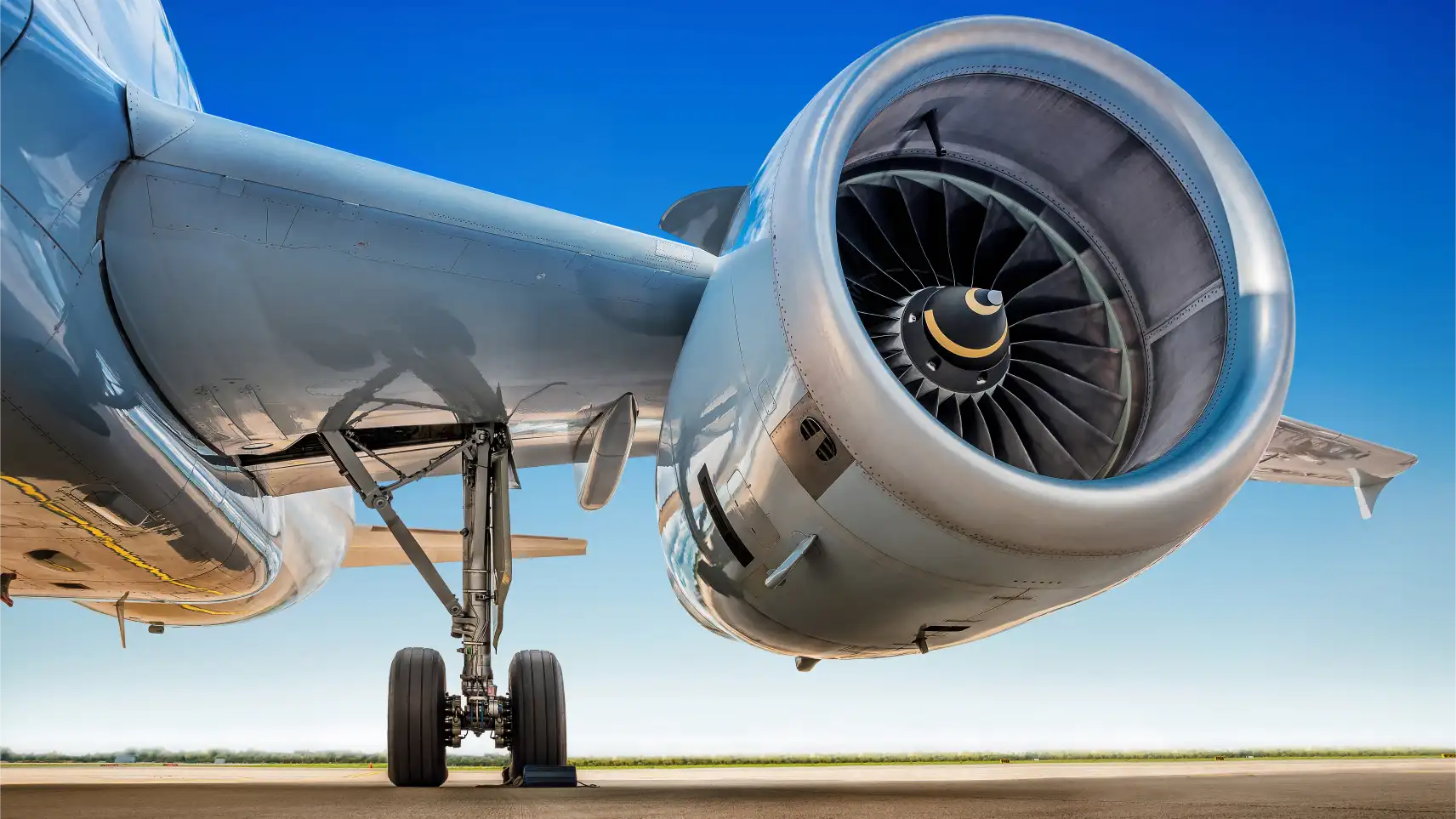
Aerospace engineering is the field of engineering focused on the design, development, testing, and production of aircraft and spacecraft. According to the Penn State College of Engineering, there are two overlapping branches:
- Aeronautical engineering: Focuses on aircraft that operate within the Earth’s atmosphere
- Astronautical engineering: Focuses on spacecraft and systems used beyond Earth
Graduating aerospace engineers find employment in various fields, such as aerospace product and parts manufacturing, government, scientific research, navigation, measuring, electromedical, and control instruments manufacturing. The typical entry-level education is a bachelor’s degree.
Unlock Your Writing Potential: Students in Our Writing Competition Preparation Class Are More Likely to Secure Awards
2. Essential High School Courses
Building a strong academic foundation is one of the most important steps toward becoming an aerospace engineer. Here are the course requirements for a Bachelor of Science in Aerospace Engineering at the Georgia Institute of Technology, to help students understand what they need to succeed. The program begins with a strong foundation in math, physics, chemistry, and computing, then proceeds to advanced topics such as aerodynamics, propulsion, and systems design.
Mathematics
Math is the backbone of engineering. In college, aerospace students take Calculus, Linear Algebra, Differential Equations, etc. For high school students, they should aim to complete Algebra → Geometry → Trigonometry → Precalculus -> Calculus (if available) in that order.
These subjects help develop problem-solving and analytical thinking skills essential in engineering.
Physics
College coursework includes Mechanics and Electricity & magnetism. These topics directly explain how rockets launch, how spacecraft orbit Earth, and how forces act on vehicles. Interested students should take physics in high school as early as possible and definitely pursue AP Physics, especially Mechanics, to deepen their understanding and demonstrate their commitment to the field.
Computer Science
Modern aerospace engineering relies heavily on computing. At universities such as Georgia Institute of Technology, students take programming courses designed specifically for engineers, where they learn to write code for simulations, data analysis, and system modeling.
For high school students, developing basic programming skills becomes a major advantage. Learning languages such as Python enables fundamental capabilities for solving problems more efficiently and even simulating real-world systems, such as projectile motion or simple flight paths. You don’t need to be an expert early on, but becoming comfortable with coding will give you a head start in college.
Chemistry
Although aerospace engineering is often associated with physics and math, chemistry also plays an important role. In college, students take introductory chemistry courses to understand material properties and chemical reactions, particularly those related to fuel and propulsion systems.
In high school, taking chemistry can help you build this foundation. Rather than memorization, understanding the application of chemical principles to real-world systems is more advantageous. This mindset will make it easier to connect chemistry concepts to engineering applications later on.
English and Communication
Even highly technical fields like aerospace engineering require the ability to write reports, present ideas, and collaborate with teams. Your English and writing classes in high school are more important than they may seem. Being able to clearly explain complex ideas, whether in a lab report, presentation, or research paper, is a critical skill for any engineer. A career path for an aerospace engineer involves academia and research, so strong communication skills are valuable.
78% of Aralia Students Win Prizes in the John Locke Essay Competition
3. Soft Skills for High School Students
Success in aerospace engineering isn’t just about academic performance. As seen in large-scale missions led by organizations like NASA, engineers must also collaborate, adapt, and think creatively under pressure. Students should also focus on developing:
- Critical thinking and problem-solving: Engineers must analyze complex challenges and develop effective solutions, ranging from optimizing fuel efficiency to ensuring spacecraft safety in extreme environments.
- Creativity: Whether designing more efficient propulsion systems or improving spacecraft materials, engineers must think beyond standard solutions. High school students can begin cultivating creativity by exploring complex projects, experimenting with designs, or even participating in competitions that encourage innovative thinking.
- Collaboration: Aerospace projects are rarely completed by individuals working alone; instead, they involve large teams of engineers, scientists, and specialists from different disciplines. Large-scale projects require teamwork across multiple disciplines.
- Communication: Engineers must clearly explain their ideas through reports and presentations
- Resilience: Engineering is an iterative process that involves testing, failure, and improvement. Even the most advanced space missions go through multiple reconfigurations before succeeding.
4. Extracurricular Activities to Build Experience
Hands-on experience can set students apart and deepen their understanding of aerospace concepts. Below are some examples of extracurricular activities students can participate in at high schools.
Robotics clubs
These clubs allow students to design, build, and test machines or rockets, helping them understand engineering principles such as mechanics, aerodynamics, and control systems more tangibly. Working on team projects also builds collaboration skills, which are crucial in aerospace engineering.
STEM competitions
STEM competitions such as the Science Olympiad, FIRST Robotics, or model rocket competitions offer another avenue for skill development. These programs challenge students to solve complex problems under time constraints, encouraging creativity, critical thinking, and innovation. Success in these competitions also demonstrates initiative and commitment, which can strengthen college applications.
Independent projects
High school students can experiment with building model rockets, simulating orbital mechanics using software, or creating small coding projects that mimic engineering processes. These self-driven efforts show curiosity and motivation, two traits that aerospace programs and employers highly value.
Online courses and Summer programs focused on STEM or engineering
Many universities and platforms offer short courses that allow students to explore advanced topics before college. These programs can introduce students to advanced concepts such as propulsion, aerodynamics, and structural design in greater depth than standard high school classes.
MIT also offers various STEM-related summer programs for high-achieving students. Click here to learn more.
In addition, students can gain valuable experience through Aralia’s Conduct Research and Publication Program. Aralia connects students with instructors to conduct guided research projects in STEM fields, including aerospace-related topics. Students can explore advanced concepts, design experiments, analyze data, and even contribute to publications or online articles.
Here are some relevant articles: Popular Extracurricular Activities for College Applications and STEM Activities for High School Students.
5. Colleges and Universities that Offer Aerospace Engineering Degrees
Students interested in aerospace engineering should start planning their long-term academic path early. Choosing the right college is an important step, as it can shape the opportunities available for research, internships, and career development.
Choosing a Major
Most students interested in aerospace engineering pursue one of the following undergraduate degrees:
- Aerospace Engineering – The most direct path, covering aeronautical and astronautical systems, propulsion, structures, and avionics.
- Mechanical Engineering – Offers a broad engineering foundation with opportunities to specialize in aerospace topics.
- Electrical Engineering – Useful for students interested in avionics, control systems, and aerospace electronics.
Top Colleges for Aerospace Engineering
Here are some of the leading universities in the U.S. for aerospace engineering:
- Massachusetts Institute of Technology (MIT) – Known for its cutting-edge research and strong connections to NASA and industry.
- California Institute of Technology (Caltech) – Offers intimate class sizes and strong aerospace research programs.
- Stanford University – Combines interdisciplinary engineering training with innovation in space technologies.
- Georgia Institute of Technology – Features a highly ranked aerospace engineering program with hands-on labs and co-op opportunities.
- University of Michigan, Ann Arbor – Known for its extensive aerospace labs and student research opportunities.
- Purdue University – Offers strong connections to NASA and notable alumni in aerospace engineering.
- University of Texas at Austin – Strong emphasis on both aeronautical and astronautical systems.
- University of Colorado Boulder – Offers specialized programs in astronautics and space engineering.
- Pennsylvania State University – Large program with opportunities in aerospace design, propulsion, and systems.
- Embry-Riddle Aeronautical University – A dedicated aerospace university with extensive hands-on flight and engineering programs.
Thoroughly researching programs and understanding what each university offers allows students to make informed decisions about which school aligns with their interests and career goals. Combining a strong academic record with hands-on projects, research, and leadership experiences, such as those available through Aralia, can help students stand out in the competitive admissions process for top aerospace programs.
We are entering a new era of space exploration, inspiring the next generation of engineers. Individuals who started developing their skills early are the foundation for modern aerospace engineering. If you’re interested in aerospace engineering, the most important step is to begin now. Focus on building strong fundamentals, explore your interests through projects and activities, and stay curious about the world around you.
Explore Aerospace Engineering Through Aralia’s Programs
High school students looking to get a head start in aerospace engineering can explore unique opportunities in a structured and supportive environment through Aralia Education. Beyond traditional classes, Aralia connects students with expert instructors who can guide them through research projects, hands-on experiments, and advanced STEM concepts.
Through Aralia, students can:
- Conduct Guided Research Projects – Work with instructors to investigate aerospace-related topics, from propulsion systems to orbital mechanics, gaining experience in designing experiments, collecting data, and analyzing results.
- Publish and Present Work – Develop strong communication skills by sharing research findings through Aralia’s platforms and by learning to present complex ideas clearly to peers and mentors.
- Build a Competitive Portfolio – Participation in research, publication, and hands-on projects exhibits initiative, curiosity, and readiness for rigorous engineering programs in college.
Through academic support and real-world application, Aralia’s programs allow students to explore aerospace engineering early, build critical skills, and gain a competitive edge for college and future careers. Whether students are experimenting with model rockets, coding simulations, or contributing to STEM publications, Aralia helps students transform their curiosity about space into tangible experiences and achievements.