

By 2026, artificial intelligence will be integrated into every aspect of higher education:
- AI will function as a core university infrastructure, integrated into advising, tutoring, admissions, research, and daily campus operations.
- AI literacy will become an essential graduate skill, with students expected to use AI critically, ethically, and responsibly.
- Admissions and course design will evolve, with AI supporting application reviews and professors redesigning assessments to prioritize reasoning and critical thought.
- Universities will place greater emphasis on governance, data privacy, and transferable skills such as critical thinking and adaptability as AI reshapes the job market.
Over the past three years, we have seen a shift from universities experimenting with generative AI tools to integrating them across teaching, research, admissions, advising, and other campus operations. Today, the question is no longer whether AI will change higher education, but how those changes will shape learning quality, integrity, and long-term career outcomes.
For students and parents navigating college choices, understanding these changes is essential. Below are the six most important predictions that will define how AI impacts higher education in 2026 and how this may affect your child’s studies.
1. AI Will Be Treated as Part of Core University Infrastructure

By 2026, AI will no longer be a novel innovation in the experimentation stage. Many universities are now starting to treat AI as a core institutional infrastructure, the same way management systems (Canvas) or cloud services (Google Workspace) are used and valued.
Instead of professors choosing their own AI tools, universities are rolling out campus-wide AI access with clear rules on data use, security, and responsibility. In fact, large systems like the California State University network already give hundreds of thousands of students and staff official access to AI tools, including ChatGPT. Other universities are building centralized AI platforms or investing in their own technology systems to meet the rapidly advancing needs of higher education.
Students will interact with AI more often

Contrary to popular belief, AI can provide support beyond just aid when writing essays. It may also help in academic advising, tutoring, research, career planning, and even administrative tasks, such as course registration.
Because of these many uses, a clear AI protocol in universities should be in place. Otherwise, students may have confusing expectations between classes and face potential risks involving data privacy. Schools that take AI seriously at an institutional level are better positioned to prepare students for a world where AI is integrated as part of everyday work.
Improve Your Grades Within One Semester
2. AI Literacy Will Become an Expected Graduate Skill
By now, AI use among university students is growing. Surveys consistently show that roughly nine out of ten students have used AI for tasks such as brainstorming, summarizing, drafting, or clarifying complex ideas. In 2026, universities will stop pretending that students are not using AI and instead focus on its proper and ethical use.
The issue now will no longer be access AI access, but fluency: the ability to use these tools critically, ethically, and effectively.

Students must use AI responsibly
Universities are moving away from rigid “no AI” policies and toward teaching students responsible and critical use of AI. This shift places emphasis on verification skills, transparency about AI use, domain judgment, and understanding when AI should not be used. Accordingly, assignments and assessments are being redesigned to reflect real-world workflows, where AI is present but human reasoning remains essential.
3. AI Will Play a Larger Supporting Role in Admissions

AI is increasingly used in admissions to handle scale and complexity of screening processes. Universities are utilizing AI tools to read and summarize essays, analyze transcripts, process recommendations, and conduct preliminary screenings, especially as application volumes rise due to test-optional policies.
With such assistance, AI dramatically improves efficiency and consistency, allowing admissions officers to focus more on holistic evaluation rather than repetitive tasks, like organizing applications or reviewing basic information. However, final decisions remain in human decisions, guided by institutional values, critical assessment, and ethical standards.
For students, this means that what matters most in an application is being genuine and authentic. Applications that clearly communicate a student’s experiences, interests, and principles are easier for both humans and AI systems to evaluate accurately.
4. Course Design Will Continue to Evolve in Response to AI

After years of growing AI adoption, many professors and students are starting to feel overwhelmed by constant AI use. As a result, some instructors are choosing to limit AI in certain assignments. This usually leads to the alternative: more oral exams, handwritten or in-class writing, step-by-step projects, or activities that focus on how students think rather than just the final answer.
Overall, professors are rethinking what college learning should build, and it all boils down to important skills like reasoning, reflection, and original thinking. In 2026, teaching will likely become more varied, with instructors redesigning their syllabi to reduce overreliance on AI-generated work. For example, take-home essays will quietly disappear from many core courses, because they no longer measure learning.
5. AI Governance Will Become More Visible and More Important

AI governance is no longer an internal policy discussion; it is becoming a formal auditable matter. Federal funding guidelines, accreditation bodies, and regulators are increasingly signaling that educational institutions must demonstrate how AI systems are governed, monitored, and aligned with civil rights, privacy, and accountability standards.
Undoubtedly, these guidelines are essential if we are to adopt AI as a norm in university. AI use without formal governance creates real risks: biased outcomes, data misuse, accessibility failures, and erosion of trust, among others.
Why it matters
Universities that cannot explain how AI decisions are made or who is responsible when things go wrong risk losing credibility, funding opportunities, and regulatory standing. Conversely, institutions with strong AI governance frameworks gain a competitive advantage by demonstrating responsibility and trustworthiness.
Aralia Students Are 4x More Likely to Publish a Research Paper
6. Transferable Skills Will Matter More Than a Major
AI is changing the job market faster than colleges can redesign their curricula. Many students will enter roles that did not previously exist , and many careers in the present are constantly being reshaped by technological change. For example, a “storyteller” in the AI era is no longer defined as a novelist, author, or creative writer. Universities, in response, are emphasizing transferable skills, such as analytical thinking, communication, digital literacy, and adaptability, across disciplines.
Students’ long-term success, then, will depend less on the title of their major and more on their ability to learn continuously and apply skills in new digital contexts. Exposure to AI-related skills across fields is becoming part of this broader preparation.
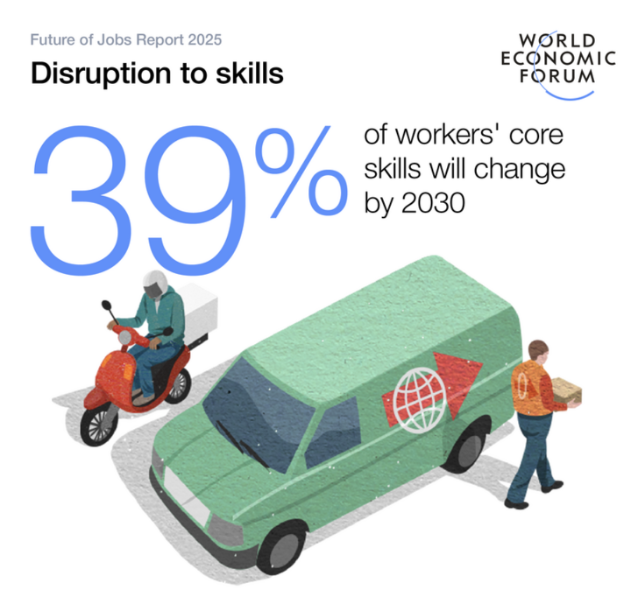
According to the World Economic Forum’s (WEF) Future of Jobs Report 2025, 39% of the core skills required of workers will change by 2030. As a result, universities are starting to move away from the idea that one major leads to one specific career. Instead, the focus is now more on building flexible skillsets that can transfer across industries. This includes teaching AI competence in every major, offering short certificates or skill-based programs alongside students’ degrees, and creating stronger connections to internships and real-world work.
For students, this means that actively exploring AI tools and developing interdisciplinary skills will best position them to navigate future career changes and challenges.
By 2026, AI will not be a single feature or tool that students can choose to either use or ignore. It will become an indispensable part of university operation, student education, admission processes, and career preparation for graduates. But this does not mean that education is becoming less human. In many ways, the opposite is true. As AI takes over repetitive tasks, universities are being pushed to focus on what really matters: critical thinking, judgment, creativity, ethical decision-making, and the ability to learn and adapt over time.
In 2026, the most important question shifts from “Does this university use AI?” to “Does this university use AI intentionally, responsibly, and in service of learning and long-term adaptability?” Students who learn to work with AI thoughtfully, without outsourcing their original thought, will most likely succeed in higher education and in an increasingly unpredictable future of work.
Read more:
Building Responsible AI Skills for Academic Success
As AI becomes a normal part of school and work, one thing is becoming clear: students must know how to use it properly. Misusing AI can lead to academic integrity issues, weak cognitive skills, or unoriginal work that students cannot explain or defend. On the other hand, responsible AI use can strengthen writing, deepen understanding, and develop creativity and self-expression.
Our Responsible Use of AI in Academic and English Writing course helps students learn how to use AI as a supportive learning tool, not a shortcut. Students are taught when AI can help with brainstorming, outlining, revising, and language clarity, and when it is inappropriate to use. By enrolling to our course, you will learn how to verify AI-generated content, avoid overreliance, and clearly explain your own ideas and writing process.

Responsible Use of AI in Academic and English Writing
This Responsible Use of AI in Academic and English Writing course is designed to teach students how to integrate artificial intelligence (AI) tools into their academic and English writing processes responsibly, effectively, and ethically.