

Studying at a U.S. high school gives international students the opportunity to experience an international education, develop academic English, become more independent, and prepare for college in the United States. This guide covers the key information families need to know about studying at a U.S. high school in 2026.
Unlike college students, high school students are still developing their academic knowledge, life skills, and independence. Choosing the right school, therefore, involves more than considering its reputation. Families should also take into account the student’s academic abilities, personality, maturity, and the family’s financial circumstances.
This guide brings together the essential information families need to plan for high school study in the United States in 2026. It covers how to choose between public, private, and boarding schools, prepare a strong application, and build an academic path that supports the student’s long-term goal of attending a U.S. college.
1. Why Study in the U.S. Starting in High School?
Experience an International Learning Environment
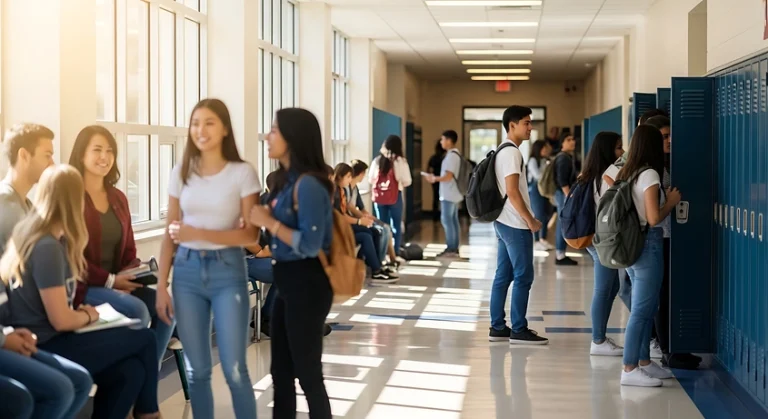
One reason the United States remains a popular study-abroad destination is the variety of academic programs, teaching approaches, and opportunities for personal growth offered by its education system. Rather than focusing solely on absorbing information and earning high grades, many U.S. high schools encourage students to ask questions, participate in discussions, express their ideas, complete projects, and apply what they learn to real-world situations. These experiences help students develop critical thinking, independent learning, communication, and problem-solving skills.
Prepare for the U.S. College Admissions Process
Studying at a U.S. high school can help students become familiar with the teaching methods, assessment practices, and academic culture they will encounter at American colleges and universities.
By studying in the United States, students have the opportunity to build an academic record within an education system that U.S. colleges understand well. Their applications may include high school transcripts, the rigor of their coursework, personal essays, letters of recommendation, extracurricular activities, and achievements that demonstrate their abilities and interests.
Many private and boarding schools also have college counseling offices that help students explore colleges, develop a balanced college list, plan their application timelines, and prepare the materials they need to apply.
85% of Aralia Students Place in Top Writing Competitions
Explore Advanced Coursework and Academic Research
One notable advantage of the U.S. high school system is the flexibility students have to choose courses at different levels of difficulty based on their abilities and academic goals. Two common options for advanced coursework are Honors and Advanced Placement (AP) classes. Some high schools also offer programs in scientific research, academic writing, debate, and interdisciplinary projects.
Develop English Proficiency in an Immersive Environment
Studying in the United States gives students opportunities to use English in a wide range of situations, from listening to lectures and reading books to writing assignments and communicating with teachers, classmates, and host families. More importantly, students can develop not only conversational English but also academic English proficiency. This includes the ability to understand complex texts, analyze sources, build well-supported arguments, and write according to the expectations of different subjects.
The multicultural environment in the United States also exposes students to people from diverse linguistic and cultural backgrounds. Depending on the school’s offerings, students may have the opportunity to study Spanish, French, Chinese, or other languages.
Build Independence and Adaptability
Studying abroad in high school means learning to manage everyday responsibilities at an earlier age. Students need to organize their schedules, complete assignments on time, manage spending money, take care of their health, communicate with adults, and seek help when challenges arise. Students living at boarding schools must also follow dormitory rules, respect shared spaces, and learn to live alongside people with different habits and routines. These experiences can help students become more confident, responsible, and adaptable as they prepare for college life.
2. An Overview of the U.S. High School System
Types of High Schools in the United States
The two most common types of high schools in the United States are public and private schools.
- Public High Schools are primarily funded through public revenue and overseen by local or state education authorities. They are the most common option for U.S. students living within a school’s designated attendance zone. International students may also attend public high schools under certain eligible programs and conditions. Public schools are often a suitable option for students interested in a short-term exchange program or spending one academic year in the United States.
- Private High Schools receive funding through tuition, donations, endowments, and other sources. They can establish their own educational focus, class sizes, advanced coursework, and extracurricular offerings. Private schools are a popular choice for international students who want to study in the United States for multiple years, complete Grades 9–12, and earn a U.S. high school diploma.
Comparing Public and Private High Schools in the United States
Criteria | Public High Schools | Private High Schools |
Funding | Primarily funded through state and local government revenue | Funded through tuition, donations, and other private sources |
Cost for International Students | F-1 students must pay the full, unsubsidized cost of education and may attend a public high school for a maximum of 12 months | Generally higher, depending on the school and program |
Length of Study | F-1 students are limited to 12 months at a public high school | Students may attend for multiple years, subject to admission and visa requirements |
Class Size | Varies by school and school district | Many schools offer smaller classes, though this varies by school |
Curriculum | Follows state and school district requirements | Follows applicable graduation requirements while offering a curriculum shaped by the school’s educational focus |
Advanced Coursework | Availability depends on the school’s resources | Varies by school; options may include Honors, AP, and other advanced programs |
Extracurricular Activities | Depend on the school and its budget | May offer a wide range of activities, depending on the school’s resources and focus |
International Student Support | Depends on the school district and program | Varies by school; some have dedicated international student support teams |
Housing | Students typically need to arrange a host family or another suitable living arrangement with an appropriate guardian, as required | May be offered as a day school or boarding school |
Private high schools can be further divided into two models: private day schools and boarding schools.
- Day Schools: Students attend classes and participate in school activities during the day, then return to their place of residence afterward. International students may live with a host family, relatives, or a suitable guardian, depending on program requirements and applicable regulations.
- Boarding Schools: Students live and study on campus or in school-managed residential facilities. Beyond academic classes, students follow structured schedules that may include sports, clubs, supervised study periods, and specific rules for residential life.
For a more detailed comparison, see Aralia’s guide to boarding schools vs. day schools in the United States.
Top High Schools in the United States
The United States is home to many well-known public, private, and boarding high schools recognized for their academic programs, teaching quality, and student development opportunities. Below is a collection of Aralia guides to leading U.S. high schools, organized by school type and location.
- U.S. News High School Rankings: Top 50 Public High Schools in the United States
- 50 Top Boarding Schools in the United States for 2027
- 50 Best Private High Schools in the United States for 2027
- Well-Known High Schools in the United States: Public, Private, and Boarding Schools
- 9 Leading Boarding Schools in Texas
- 7 Top Boarding Schools in New York
- 8 Top Boarding Schools in California
- 10 of the Most Expensive Boarding Schools in the United States
What Subjects Do Students Take in U.S. High Schools?
The U.S. high school curriculum typically includes the following core subject areas:
- English language and literature
- Mathematics
- Natural sciences, such as biology, chemistry, and physics
- Social studies, such as history, geography, economics, and government
- World languages
- Arts and electives
Students may also take physical education, health, technology, computer science, and specialized courses based on their school’s offerings and state graduation requirements.
There is no single curriculum that applies identically to every U.S. high school. Graduation requirements, the number of credits students must earn, and the courses available vary by state, school district, and individual school. In general, students must complete the required credits across core subject areas to earn a high school diploma.
Honors, AP, and Other Advanced Programs
Honors and Advanced Placement (AP) classes are two common options for students seeking greater academic challenges. Honors classes typically involve more demanding reading, writing, analysis, or problem-solving than standard-level courses. AP courses follow subject-specific curricula and culminate in standardized AP exams.
Some schools also offer the International Baccalaureate (IB) program, independent research opportunities, or specialized courses focused on science, the arts, and the humanities.
The Role of Sports and Extracurricular Activities
Extracurricular activities are an important part of student life at many U.S. high schools. Students can explore a variety of opportunities, including sports, music, theater, debate, journalism, volunteering, academic clubs, and community projects.
However, not every school requires students to participate in at least one sport. Participation requirements for athletics and clubs vary by school, team, and program.
3. Requirements for Studying at a U.S. High School
Admission requirements for U.S. high schools vary depending on the type of school, the grade level, and the academic program. Below are the key requirements parents and students should prepare for.
Age and Grade Level
International students typically enter U.S. high schools between the ages of 14 and 17, corresponding to Grades 9–12. However, each school sets its own requirements for age, academic performance, and grade placement. Families planning for their child to earn a U.S. high school diploma should also review graduation requirements, including the number of years of study, required credits, and how previous academic records from your country may be evaluated.
Academic Performance and GPA
GPA, or Grade Point Average, is an important part of a high school application. There is no single GPA requirement across all U.S. schools. Some schools accept students with solid academic records, while highly selective private schools generally expect strong and consistent performance.
English Proficiency
Depending on the school, students may need to submit scores from an English proficiency test such as IELTS, TOEFL, TOEFL Junior, or the Duolingo English Test, or take the school’s own English assessment. Some schools evaluate language proficiency through interviews and academic records, so requirements vary by institution.
SSAT, ISEE, and Entrance Assessments
Some private schools require standardized test scores, including:
- SSAT(Secondary School Admission Test): An academic aptitude test used by many secondary schools to evaluate applicants.
- ISEE (Independent School Entrance Examination): An entrance exam used by many private schools to assess students’ mathematics, reading comprehension, and language skills.
Not every school requires either test. Students should review each school’s admissions requirements to determine which tests, levels, and score submission deadlines apply.
Essays, Letters of Recommendation, and Interviews
Many private schools also consider personal essays, teacher recommendations, and admissions interviews. These components give students an opportunity to demonstrate their personality, interests, critical thinking skills, and fit with the school’s learning environment. Schools may also request extracurricular activity lists, athletic or artistic achievements, or writing samples.
Health Requirements
Before enrollment, students are generally required to complete health forms, provide immunization records, and submit other medical documentation requested by the school. If a student has allergies or requires specialized medical care, parents should inform the school in advance to arrange appropriate support.
Financial Requirements
Families must demonstrate that they have sufficient funds to cover tuition and living expenses throughout the student’s time in the United States. For students applying for an F-1 visa, schools generally require proof of financial support before issuing Form I-20.
U.S. Student Visas: J-1 and F-1
International students typically consider one of the following student visa categories:
- J-1 Visa: Designed for cultural exchange programs, which often involve one academic year of high school study. Students must meet the eligibility requirements established by their program sponsor.
- F-1 Visa: Intended for students attending an eligible educational institution authorized to enroll international students. This is a common option for students planning to attend a private high school in the United States for multiple years.
F-1 students may attend a U.S. public high school for a maximum of 12 months and must pay the full, unsubsidized cost of education as required by U.S. regulations.
4. The Cost of Attending High School in the United States
The cost of studying at a U.S. high school is one of the most important factors for families to consider when planning for their child’s education abroad. The total budget depends on the type of school, location, housing arrangements, financial aid, and individual spending needs.
Tuition
According to the National Association of Independent Schools (NAIS), data for the 2024–2025 academic year shows that average tuition at member schools was approximately $32,251 per year for day schools and $71,715 per year for seven-day boarding schools. These figures are intended as a reference for schools belonging to the association and do not represent tuition rates for all U.S. high schools.
Living Expenses
Students attending day schools or public high schools while living with a host family generally need to budget for accommodation, meals, utilities, and other basic living expenses.
Costs can vary significantly depending on the location and services provided. Families may want to use a preliminary estimate of $500–$2,000 per month when comparing housing options, then confirm the actual costs with the accommodation provider or program.
Additional Expenses
In addition to tuition and living expenses, families should budget for the following:
- School application and processing fees.
- SSAT, ISEE, or English proficiency test fees, if required.
- Document translation, notarization, and application shipping costs.
- Student visa application fees and applicable student information system fees.
- Airfare and local transportation.
- Health insurance.
- Textbooks, computers, uniforms, and other school supplies.
- Other personal and school-related expenses.
| School Type | Estimated Annual Budget | Key Costs to Consider |
| Public high school (F-1 visa) | Approximately $10,000–$25,000 or more | Education costs, housing, meals, insurance, and living expenses. F-1 students may attend public high school for a maximum of 12 months. |
| Private day school | Approximately $30,000–$60,000 or more | Tuition, housing, meals, guardianship, and living expenses. |
| Private boarding school | Approximately $45,000–$85,000 or more | Tuition and boarding costs. Check which additional expenses are not included. |
| High-cost boarding school | May exceed $85,000 | Depends on tuition, services, programs, and additional fees. |
Excel in the U.S. High School Environment and Prepare for Top U.S. Universities
5. Planning and Applying to U.S. High Schools
Which Grade Should Students Start at a U.S. High School?
There is no single grade that is right for every student. The best time to study in the United States depends on the student’s English proficiency, academic performance, independence, graduation goals, and family budget.
- Starting in Grade 9: Suitable for students who want more time to adjust to the U.S. education system, build a strong academic foundation, and participate in extracurricular activities throughout all four years of high school.
- Starting in Grade 10: A balanced option for students who already have a solid academic and English foundation. They still have time to adapt to a new environment, choose advanced courses, and prepare for college applications.
- Starting in Grade 11: May suit students with clearly defined academic goals, but families should pay particular attention to credit transfers, graduation requirements, and the time available to build a strong college application.
- Starting in Grade 12: Requires careful consideration because students may find it difficult to earn enough credits to graduate. If the primary goal is to attend a U.S. university, parents should compare transferring to a U.S. high school with completing high school in your country and applying directly to U.S. colleges.
When Should Students Start Preparing?
For highly competitive private schools, families should begin researching options approximately 12–18 months before the intended enrollment date. Students who need to improve their English, prepare for the SSAT or ISEE, build an extracurricular profile, or seek substantial financial aid may need even more time.

Step 1: Research and Choose the Right Schools
Research U.S. high schools based on teaching quality, learning environment, academic goals, budget, class size, and support for international students. Common options include public schools, private day schools, and boarding schools. You can compare schools and gather information from NAIS, EducationUSA, Boarding School Review, Niche, and Private School Review.
Step 2: Understand Admission Requirements
Each school has its own admission criteria. Applications typically include an application form, transcripts from the previous two to three years, standardized test scores such as the SSAT or ISEE if required, English proficiency scores, letters of recommendation, a personal essay, and an interview. Some schools may also request financial documents, immunization records, or evidence of special talents. Check each school’s official website for specific requirements and application deadlines.
Step 3: Prepare Application Materials
Gather and translate academic transcripts early, prepare for any required exams, write personal essays, request letters of recommendation, and practice for interviews. Each component should be carefully prepared to demonstrate the student’s academic abilities, character, and potential for growth.
Step 4: Submit Applications on Time
Keep track of application deadlines, test score submission dates, and scholarship deadlines for each school. Since admission procedures vary, use a calendar or reminder app to stay organized. Aim to submit applications a few days before the deadline to reduce the risk of last-minute errors.
Step 5: Explore Scholarships and Financial Aid
Research merit-based scholarships and need-based financial aid offered by individual schools, as well as funding opportunities from external foundations and organizations. Carefully review eligibility criteria, required documents, and application deadlines.
Step 6: Complete the Student Visa Application Process
After admission, students will receive Form I-20 from their school to begin the F-1 student visa process. The main steps include completing the visa application, paying the SEVIS I-901 fee, scheduling an interview at a U.S. embassy or consulate, and preparing documents related to the student’s study plans, financial resources, and other relevant information.
6. Frequently Asked Questions About Studying at a U.S. High School
Can International Students Attend Public High Schools in the United States?
Yes. International students may attend U.S. public high schools under eligible visa arrangements. However, students with F-1 visas may attend public high school for a maximum of 12 months and must pay the full, unsubsidized cost of their education.
Does Attending a U.S. High School Improve Students’ Chances of Getting into a Top University?
Studying in the United States can help students become familiar with the education system, access advanced coursework, and receive guidance from their schools. However, attending a U.S. high school does not guarantee admission to a top university. Admission decisions also depend on academic performance, course rigor, essays, extracurricular activities, letters of recommendation, and each applicant’s overall fit with the institution.
Can International Students Receive Scholarships to Attend U.S. High Schools?
Yes. Some schools and organizations offer scholarships or financial aid to international students. However, eligibility requirements and award amounts vary considerably.
Can Students Study in the United States if Their English Is Not Yet Proficient?
This depends on the school’s admission requirements and its ability to support international students. Some schools offer English language support classes or supplementary programs, while others require students to demonstrate a certain level of English proficiency before enrollment.
Studying at a U.S. high school is a long-term educational decision that affects more than a student’s choice of school. It can also shape their personal growth, independence, and academic direction. With careful planning and collaboration among students, families, and schools, the high school years in the United States can provide an important foundation for developing knowledge, skills, and the ability to thrive in an international environment.
Read More:
Ready to Begin Your Journey at a U.S. High School?
Studying at a U.S. high school is an exciting milestone, but it also comes with challenges. Adjusting to a new learning style, strengthening English proficiency, and adapting to a different culture all take time and the right support. With programs designed for international students and instruction from experienced educators at U.S. boarding schools, Aralia Education can help students prepare for this next chapter.
Our experienced instructors, many of whom teach at leading U.S. high schools, are ready to guide students every step of the way. At Aralia, students can develop essential academic skills and build the confidence they need to thrive in their new school environment.