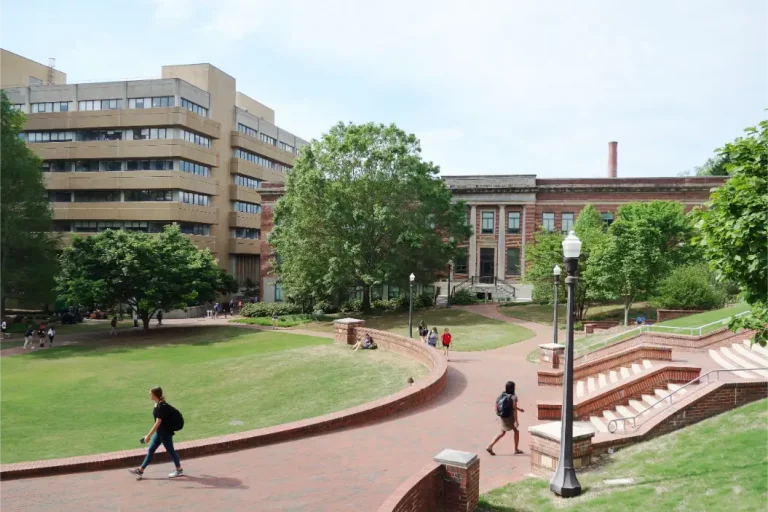


1. Studying in the USA
Education Quality
The United States is consistently regarded as one of the world’s leading education systems. It is home to globally renowned institutions such as Harvard, MIT, and Stanford, which consistently dominate major international rankings, namely the U.S. News and QS, with more universities placed in the global top 50 than any other country. As such, this only reflects their academic prowess and the depth of research opportunities and innovation found across U.S. campuses.
With more than 5,000 public and private universities, the U.S. offers an unrivalled range of academic choices. Students can choose from two categories: the large, research-focused national universities known for their dynamic and competitive environments, or smaller liberal arts colleges that emphasize focused faculty mentorship and a tight-knit academic community. In the US, there is also one key advantage we often highlight to students: academic flexibility. Many U.S. universities allow students to explore different subjects in their first year, change majors, or even pursue double majors before committing to a final academic path.
85% of Aralia Students Win Awards at Prestigious International Essay Competitions
Admission Requirements
A complete US college application package typically includes:
- High school GPA
- Standardized test scores: IELTS/TOEFL, SAT/ACT, AP/IB, etc.
- Personal essay (main essay) and supplemental essays, as required by each school
- Teacher recommendation letters
- Extracurricular activities profile
- Achievements and awards received; scientific research; personal projects, etc.
Overall, applications to study abroad in the US are comprehensive evaluations that assess academic aspects, as well as extracurricular activities, skill set, and each applicant’s unique personality.
Tuition and Living Costs
When planning to study in the United States, cost is understandably a major consideration for international families. Generally, international students pay higher tuition than U.S. citizens, and expenses can vary by institution type.
- Average tuition at U.S. public universities is approximately $38,270 per year.
- Tuition at private universities is even higher, estimated at approximately $58,628 per year.
Living costs in the U.S. vary significantly by location. Major metropolitan areas such as New York, Boston, or San Francisco tend to be more expensive than cities in the Midwest or smaller college towns.
Learning Environment and Local Culture
The U.S. is a “melting pot” for people from every part of the world, a hub for open, multicultural learning environments where students are constantly exposed to new perspectives. This diversity not only enhances classroom engagement but also helps students build global friendships and cross-cultural understanding that persists well beyond their university years.
Beyond academics, universities are also known for their spirited campus cultures and enduring traditions. Students are encouraged to engage through organizations, clubs, sports, volunteer work, research groups, and social events. These equip students to develop skills for leadership, communication, and teamwork while immersing themselves in a distinctly college experience.
Employment Opportunities After Graduation
Graduates from bachelor’s degree programs or higher in the U.S. may stay and work after completing their studies, depending on their field. Those in STEM disciplines often benefit the most, gaining opportunities to build professional experience in a global job market.
U.S. universities also place strong emphasis on experiential learning. Students can participate in internships or practical training related to their major, applying classroom knowledge, developing technical skills, and strengthening their professional profiles before entering the workforce.
Learn more about growing and in-demand career fields in the U.S. in this article to explore employment opportunities.
Top 10 Universities in the USA
Here is a list of the top 10 universities in the USA according to US News:
#1 Princeton University – New Jersey
#2 Massachusetts Institute of Technology – Massachusetts
#3 Harvard University – Massachusetts
#4 Stanford University – California
#5 Yale University – Connecticut
#6 California Institute of Technology – California
#6 Duke University – North Carolina
#6 Johns Hopkins University – Maryland
#6 Northwestern University – Illinois
#10 Pennsylvania State University – Pennsylvania
2. Studying in Canada
Education Quality
Canada is equally well-known for its welcoming and inclusive society, as well as the academic aptitude of its education system. It consistently ranks among the top global countries for education quality, placing 4th in the U.S. News’ Education rankings, a manifestation of its high academic standards and strong public investment in education.
Canada offers a safe, supportive, and open learning environment that many international families find especially appealing. Its universities are known for rigorous teaching, exceptional research, and emphasized student wellness practices. Institutions such as the University of Toronto and McGill University are consistently among the leading global university rankings, demonstrating Canada’s growing influence in higher education worldwide. Canada’s balance of academic quality, safety, and inclusivity makes it an excellent choice for students seeking both strong educational outcomes and a positive overall study experience.
Admission Requirements
A complete application package for Canadian universities typically includes:
- High school GPA
- English language certificate scores
- Depending on the institution, some require standardized certificates, such as SAT/ACT, and personal essays
Applications to study abroad in Canada primarily focus on students’ academic performance during high school.
Tuition and Living Costs
Similar to the USA, the tuition for international students in Canada is higher than for domestic students. The average tuition for bachelor’s degree programs in Canadian universities falls around CA$36,100 per academic year. Average living costs for university students in Canada are estimated at approximately CA$15,000 per academic year.
Learning Environment and Local Culture
Canada is preferred for many international students due to its safety and hospitality. It also uses two official languages simultaneously: English and French. Studying in Canada, therefore, not only offers learning opportunities but also helps students practice a third language prospect.
Moreover, Canada is renowned for its multicultural society, where diverse communities coexist and interact. Their inclusive and dynamic environment yields a rich learning experience for students to grow academically, while expanding cultural awareness, adaptability, and essential life skills.
Employment Opportunities After Graduation
In Canada, international students can stay and work for up to 3 years after graduation, depending on the duration of their program. For programs of 2 years or more, most students will be granted a 3-year work permit, inviting opportunities for experience and long-term career orientation.
Notably, nearly 60% of international students express interest in applying for permanent residency in Canada, recommending Canada as an ideal study destination for other international students.
Improve Your Grades Within One Semester
Top 10 Universities in Canada

Below are the top 10 universities in Canada according to US News rankings:
#1 University of Toronto
#2 University of British Columbia
#3 McGill University
#4 McMaster University
#5 University of Alberta
#6 University of Montreal
#7 University of Waterloo
#8 University of Calgary
#9 University of Ottawa
#10 Western University
3. Comparing Study Abroad in the USA and Canada
| Criteria | Study Abroad in the USA | Study Abroad in Canada |
| Education Quality | – World’s leading education system – Diverse, flexible programs (major changes, double majors, etc.) | – Ranked 4th globally for Education (US News) – High-quality, safe, amiable teaching system |
| Admission Requirements | The application focuses on a comprehensive evaluation of multiple factors beyond academics | The application focuses primarily on high school academic performance |
| Tuition & Living Costs | approx. $45,500–$60,700 USD/year (varies by state, city) | approx. $37,000 USD/year |
| Learning Environment & Culture | – Multi-ethnic, multicultural – Universities with many traditions, distinctive extracurricular activities – Competitive, dynamic environment | – Friendly, safe country – Bilingual English–French, added opportunity to learn a new language – Multicultural and open society, encouraging experience and development |
4. Should I Study Abroad in Canada or the USA?
Each student requires different goals and needs, so there’s no fixed path for everyone. Studying in either Canada or the USA has its own strengths, but also certain limitations. To find the right destination, you need to consider your abilities, learning goals, and future development aspirations.
Here are some suggested questions to help you determine your choice:
- Which country has training programs compatible with the field of study you want to pursue? Where are employment opportunities after graduation more stable?
- Do you want to experience the multicultural environment of the USA, or try living in a bilingual English–French country like Canada?
- Do you prefer focused studying, or are you interested in extracurricular activities and cultural experiences?
- Are you ready to adapt to Canada’s cold winters?
- Does your current application meet the requirements necessary to apply to US universities?
- Do your and your family’s financial capabilities better suit US or Canadian study abroad costs?
- After graduation, do you plan to work in that country or settle there permanently?
Choosing between studying in Canada or the USA depends on your preferred field of study, the environment you want to experience, and your future career orientation. If the USA offers diversity, competition, and flexibility, Canada stands out with its safe, friendly environment and long-term settlement opportunities. You must carefully consider your learning abilities, finances, and personal goals to choose the right country for you.
Aralia's College Application Essay Writing Program
The process of preparing study abroad applications is not easy. To build an impressive application that wins over top universities, students need more than perfect transcripts or GPAs; they also need impactful personal essays, outstanding extracurricular activities such as international competition awards, or high school-level scientific research.
If you need support writing effective personal essays, consider working with experienced instructors from Aralia’s College Application Essay Writing Program. They have:
- Helped hundreds of students get admitted to top US universities like Princeton, Yale, the University of Chicago, and Williams College
- Guided 100% of students to receive admission to at least one of their top choices
- Advised students who received scholarships and admission to prestigious global universities like Oxford, Cornell, UCL, NYU, and Parsons School of Design