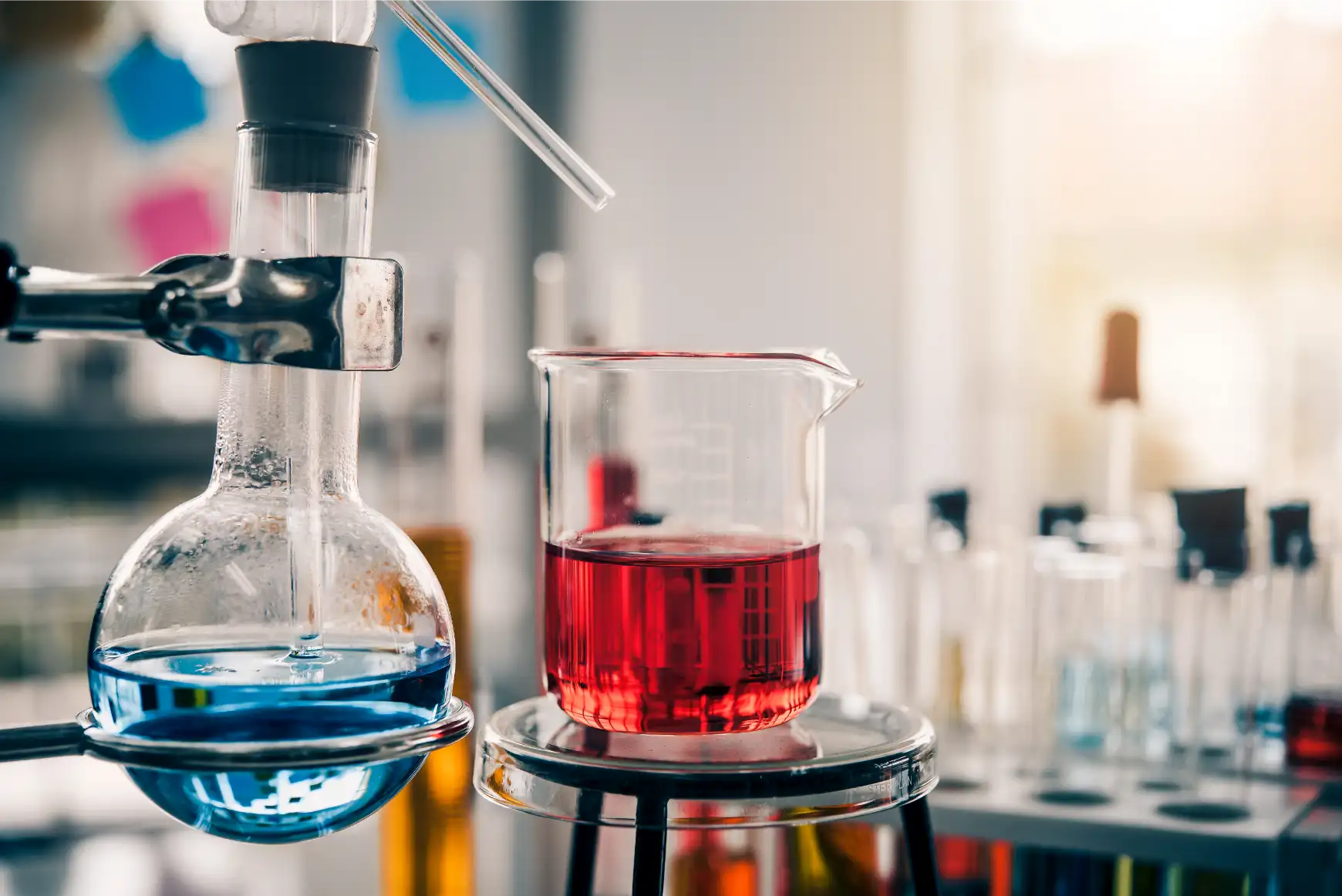


This list highlights biology competitions with key dates in Spring 2026 that are open to students in grades 9–12 across the U.S. Some competitions involve hands-on research or lab work, while others focus on exams, presentations, or scientific debate. These programs offer a chance to deepen your understanding of biology, challenge yourself academically, and strengthen your college applications in ways that go beyond standard coursework.
Why Students Should Participate in Biology Competitions?
It strengthens real scientific thinking: Biology competitions push you beyond memorization. Whether you’re designing an experiment, analyzing data, or proposing a solution to a real-world problem, you develop the kind of critical thinking and problem-solving skills that typical high school classes don’t always emphasize.
It helps you stand out in college admissions: Admissions officers read thousands of transcripts from students with strong grades. What genuinely differentiates an application is evidence of sustained initiative: a student who ventures beyond the classroom to pursue actual work or exposure in their chosen fields.
A chance to earn meaningful awards and opportunities. Many biology competitions offer significant prizes, including scholarships, research opportunities, and national recognition. Even better, many of these competitions are free to enter, making them accessible to students from a wide range of backgrounds.
Connect with like-minded people: Competitions connect you with students across the country who geek out about CRISPR, marine ecosystems, and synthetic biology the same way you do. Those connections often become the most lasting outcome of the whole experience, benefiting you throughout college and beyond.
Build a Standout College Application Essay with Aralia
Regeneron ISEF is the world’s largest pre-college science competition, organized by Society for Science. Each year, an estimated 7 million students from 75+ countries participate in affiliated local and regional fairs that feed into ISEF, with roughly 1,800 finalists advancing to the international event.
Finalists compete for nearly $9 million in awards, prizes, and scholarships, including the $100,000 George D. Yancopoulos Innovator Award and two $75,000 Regeneron Young Scientist Awards. More than 45 professional organizations award additional prizes, including internships and field trips.
Eligibility: Students in grades 9-12 or equivalent who have not reached age 20 on or before May 1 preceding ISEF.
Timeline:
- January to March: Most science fairs in the U.S. and U.S. territories are held during this time.
- May 9–15 at the Phoenix Convention Center in Phoenix, Arizona
To learn more about the Regeneron ISEF and how you can qualify, please refer to the Step-by-Step Guide to the Regeneron ISEF.
The BioGENEius Challenge is the most prestigious high school science competition specifically dedicated to original research in biotechnology. Hosted by the Biotechnology Institute, it offers three tracks students may choose from based on their research focus:
- The Global Healthcare Challenge
- The Global Sustainability Challenge
- The Global Environment Challenge
Students enter either through one of 13 state partner competitions (California (Bay Area & Southern), Colorado, Delaware, Georgia, Illinois, Iowa, Kansas, Maryland, New Mexico, North Carolina, Pennsylvania, and Virginia) or the At-Large BioGENEius Challenge (virtual, available to students in states without a local partner). Top finalists from each state and the At-Large competition advance to the International BioGENEius Challenge, where they present their research to over 16,000 attendees and a panel of industry and academic experts.
Prizes: Cash prizes total $20,000 at the international level, and state winners will receive travel awards, savings bonds, and certificates of recognition.
Eligibility: High school students with original biotechnology research
Deadline: The At-Large application deadline is May 13, 2026.
Running since 1942, the Regeneron STS is the nation’s oldest and most prestigious science competition for high school seniors. Each year, more than 2,600 seniors submit original research reviewed by PhD scientists.
Prizes: From that pool, 300 are named Scholars, each receiving a $2,000 cash prize with a matching $2,000 to their school. The top 40 finalists travel to Washington, D.C. to compete for over $1.8 million in awards, with the top prize of $250,000 being the largest scientific prize available to any US high school student.
Eligibility: High school seniors currently studying in the United States.
Application Open: The 2027 application opens June 1, 2026
Regeneron Science Talent Search (STS): The Most Complete Guide
The Davidson Fellows Scholarship is one of the most financially significant awards available to young researchers under 18. It recognizes students who have completed a substantial, original piece of work in STEM, literature, music, or philosophy.
Scholarships are awarded at $10,000, $25,000, and $50,000 levels. Fellows are invited to Washington, D.C. to meet with senators and other leaders, and the recognition carries significant weight with university admissions offices and research programs.
Eligibility: Gifted and high-achieving students, 18 years old or under, who have completed a significant piece of work.
Deadline: February 18, 2026
Science Olympiad National Tournament is the premier team STEM competition in the United States, serving over 6,000 teams at 425 tournaments across all 50 states. Teams of 15 students compete across 23 events spanning biology, chemistry, physics, earth science, and engineering. For biology-focused students, Division C events include Anatomy & Physiology, Disease Detectives, Ecology, Experimental Design, and Protein Modeling.
Science Olympiad also awards five $10,000 Founders’ Scholarships to outstanding high school seniors annually. Beyond prizes, Science Olympiad alumni consistently report that the collaborative depth of competition preparation shaped their approach to science more than any class they took in high school.
Eligibility: High school students; teams must qualify through state competitions
Competition Date: The 42nd Annual Science Olympiad National Tournament will be hosted by the University of Southern California (USC) on May 22–23, 2026 in Los Angeles.
The National Ocean Sciences Bowl is a dedicated quiz bowl competition for students with a serious interest in the ocean sciences. Teams of four or more compete in a fast-paced academic bowl format covering marine biology, chemistry, geology, physical oceanography, and ocean policy. It’s one of the few competitions that explicitly integrates environmental and policy dimensions alongside hard science.
Eligibility: Teams of 4+ high school students
Registration Timeline: Regional competitions run throughout the academic year, with the national championship held in the spring.
Co-founded by miniPCR bio and Boeing, and supported by the ISS National Laboratory and New England Biolabs, Genes in Space challenges students to design biotechnology experiments addressing real biological barriers to human space exploration. The winning experiment is conducted by astronauts aboard the International Space Station.
Since its launch in 2015, the contest has produced genuine space biology firsts: the first PCR reaction performed in space, the first use of CRISPR gene-editing in space, and one of the first cell-free synthetic biology experiments in orbit.
Students, individually or in pairs, submit a one-page proposal that identifies a problem, states a hypothesis, outlines an experimental plan, and makes the case for why the ISS is the right environment to test it. Five finalist teams receive mentorship from scientists and attend the Countdown to Discovery event in Houston, TX. Twenty-five schools win DNA Discovery System prize packages, including miniPCR thermal cyclers and gel electrophoresis systems.
Eligibility: Grades 7-12, individual or pairs
Competition Date: March 21 and 22, 2026
The Plant the Moon Challenge asks participants an interesting prompt: What nutrients, fertilizers, or modifications to lunar regolith can support sustainable crop growth for future astronauts? This competition is directly tied to NASA’s Artemis program. Each team receives a kit with a 2kg container of lunar or Martian soil simulant, pots, pH strips, and a project guide. After an 8-week growing experiment, teams submit research reports evaluated by subject matter experts. High school teams are eligible to win a trip to Kennedy Space Center, and top teams present to NASA scientists at a virtual symposium.
Eligibility: High school teams
Timeline: Registration opens every fall and spring, with fall reports due in early December and spring reports due in early April.
For Spring 2026 season, the registration deadline was January 18, 2026.
The International Genetically Engineered Machine competition (iGEM) is the gold standard for synthetic biology at the student level. Here, high school teams engineer biological systems to solve real-world problems using a shared registry of standard biological parts. Past student projects have addressed everything from antibiotic resistance and environmental contamination to disease diagnostics and biodegradable plastics.
Teams are evaluated on their experimental design and human practices (how the project engages with society). Their final presentation at the annual Giant Jamboree, an international gathering of synthetic biology teams from around the world, will also be judged by expert panels.
Eligibility: High school teams (3-15 students)
Timeline: The high school track registration typically opens in spring, with the main project deadline at the end of May 2026.
The Teen Biotech Challenge is an online poster design competition that offers an accessible, welcoming entry point into competitive biotechnology. Students create an online poster in one of three biotechnology categories to clearly and compellingly communicate a scientific concept, discovery, or application. The categories are as follows:
- Agriculture and Food Science
- Human and Animal Health
- Platform Tools and Technologies
Unlike the others, no original laboratory research is required. The focus instead is on science communication and conceptual understanding, which are exactly the skills that become foundational as students advance to more rigorous competitions.
Elibigility: Middle school and high school students
Deadline: April 1, 2026
Aralia Students Are 4x More Likely to Publish a Research Paper
How to Choose the Right Competition
Pick a competition that’s the closest to your strengths. If you write well and think analytically about ethics and science, the DNA Day Essay Contest or JSHS might be your best starting point. If you have a well-developed research project, consider applying to ISEF, BioGENEius, or the Davidson Fellows. If you’re energized by collaboration and thrive in teams, the Science Olympiad or NOSB will suit you. If creative problem-solving and design excite you more than traditional experiments, Genes in Space and iGEM are built for that mindset.
Consider the timeline honestly. Some competitions, like ISEF and Regeneron STS, require months of ongoing research. Others, like the International Biology Bowl or Teen Biotech Challenge, allow for a shorter, more focused preparation period, making them more manageable within a busy academic schedule.
Finally, students should take their current level of experience into account. Those who are newer to competitive science may benefit from starting with more accessible options, such as the International Biology Bowl, Teen Biotech Challenge, NOSB, or Science Olympiad. Students with prior research experience, however, may be better positioned to pursue more advanced competitions, including BioGENEius, JSHS, Davidson Fellows, iGEM, or ISEF, where their work can receive broader recognition.
Other resources:
Participate in Biology Competitions with Aralia
Aralia Education is an innovative online education platform for ambitious middle and high school students worldwide. Our instructors are award-winning teachers who specialize in guiding students through competitions, from building the scientific foundations needed for ISEF to crafting the kinds of genetics arguments that score well across all three rounds of the DNA Day Essay Contest.
Annual DNA Day Essay Contest Preparation
Join our specialized Annual DNA Day Essay Contest Preparation for personalized guidance and support in crafting winning essays for the Annual DNA Day Essay Contest.