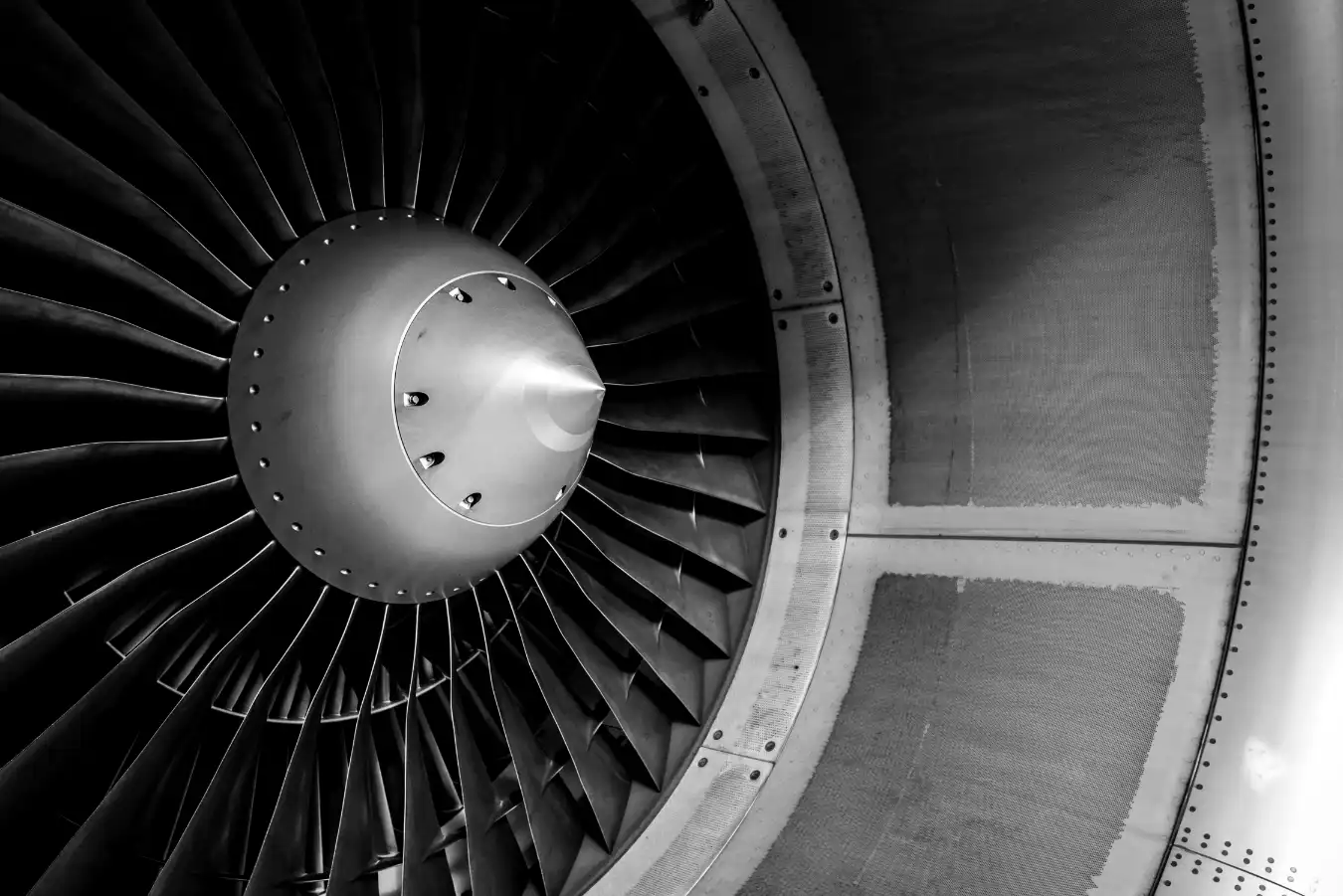


The eight summer programs below let high school students do real aerospace work: programming autonomous drones at MIT, calculating asteroid orbits with research telescopes, testing aircraft models in wind tunnels, even running flight simulations inside a mock aircraft carrier.
If your dreams include working at NASA, building the next generation of spacecraft, or studying aerospace engineering in university, the listed programs can help you develop technical skills and strengthen your academic profile for your college application. Read on to learn about key details, costs, and instructions on how to apply.
1. STEM Enhancement in Earth Science (SEES) by the University of Texas at Austin
Location: Austin, Texas (with virtual cohort options)
Cost: Free. Housing, meals, and local transportation are covered for in-person interns; a limited number of travel scholarships are also available
Deadline: February 22, 2026
Program Timeline:
July 5–18, 2026 (on-site internship)
July 20–21, 2026 (SEES Virtual Science Symposium)
Eligibility: High school sophomores and juniors (at least 16 years old) with a strong interest in Science, Technology, Engineering, and Math. Students must be U.S citizens.
The STEM Enhancement in Earth Science (SEES) Summer Intern Program is a nationally competitive research experience hosted by the University of Texas Center for Space Research, where interns collaborate with NASA, academic, and industry experts using mission data across various fields such as:
- Aerospace
- Astronomy
- Planetary science
- Remote sensing
- Microgravity research
- Space geodetic techniques
The program is incredibly competitive, with acceptance rates hovering around 5%. Just last year, 174 students were selected and placed into small, mission-focused research teams. Some interns have gone on to fly experiments aboard ZERO-G parabolic aircraft, experiencing roughly 11 minutes of weightlessness over 30 parabolas to run their projects in microgravity.
2. MIT Beaver Works Summer Institute (BWSI)
Location: Cambridge, Massachusetts, for in-person immersion; some courses also offered online
Cost: Free for most students; a fee applies for families with household incomes over $200,000. Housing is not provided for the in-person program.
Deadline: Online prerequisite registration opens in February; the summer application follows completion of that coursework. Check bwsi.mit.edu for exact 2026 dates.
Program Timeline: July 6–August 2, 2026 (4-week intensive summer program following online prerequisite coursework)
Eligibility: Rising high school seniors in the U.S. with an interest in coding (Python/UNIX), robotics, and autonomous systems
MIT Beaver Works Summer Institute is a highly prestigious, rigorous STEM program jointly run by MIT Lincoln Laboratory and MIT’s School of Engineering. Designed specifically for high school seniors, it trains students in the following areas:
- Robotics
- Artificial intelligence
- Cybersecurity
- Aerospace systems
Through hands-on, project-based learning, mentorship from MIT faculty and engineers, and collaboration with peers from across the country packed into a four-week session, BWSI participants develop advanced technical skills and gain insight into cutting-edge innovations shaping the future.
BWSI focuses heavily on project-based learning. In tracks like aerospace and autonomous systems, students learn the coding and engineering required to program drones or small robotic cars to navigate complex courses entirely on their own.
MIT Beaver Works Summer Institute
Other MIT Summer Programs for High School Students are available here.
Many Aralia Students Accepted to Yale Young Global Scholars
2. MIT Beaver Works Summer Institute (BWSI)
Location: Cambridge, Massachusetts, for in-person immersion; some courses also offered online
Cost: Free for most students; a fee applies for families with household incomes over $200,000. Housing is not provided for the in-person program.
Deadline: Online prerequisite registration opens in February; the summer application follows completion of that coursework. Check bwsi.mit.edu for exact 2026 dates.
Program Timeline: July 6–August 2, 2026 (4-week intensive summer program following online prerequisite coursework)
Eligibility: Rising high school seniors in the U.S. with an interest in coding (Python/UNIX), robotics, and autonomous systems
MIT Beaver Works Summer Institute is a highly prestigious, rigorous STEM program jointly run by MIT Lincoln Laboratory and MIT’s School of Engineering. Designed specifically for high school seniors, it trains students in the following areas:
- Robotics
- Artificial intelligence
- Cybersecurity
- Aerospace systems
Through hands-on, project-based learning, mentorship from MIT faculty and engineers, and collaboration with peers from across the country packed into a four-week session, BWSI participants develop advanced technical skills and gain insight into cutting-edge innovations shaping the future.
BWSI focuses heavily on project-based learning. In tracks like aerospace and autonomous systems, students learn the coding and engineering required to program drones or small robotic cars to navigate complex courses entirely on their own.
MIT Beaver Works Summer Institute
Other MIT Summer Programs for High School Students are available here.
3. Purdue University: Seminar for Top Engineering Prospects (STEP)
Location: West Lafayette, Indiana
Cost: $2,500 (includes tuition, housing, and meals); need-based scholarships available
Deadline: The 2026 application cycle is closed. Check Purdue’s engineering site for 2027 dates.
Program Timeline: One-week residential program starting from July 5, 2026
Eligibility: Rising high school seniors considering top-tier university engineering programs
Purdue University is known globally as the “Cradle of Astronauts” because it has produced more astronauts than any other university, a fact directly tied to the strength of its aerospace engineering department. Their STEP program has been running since 1985 and has long been offering high school seniors a VIP pass into the world of elite engineering.
This weeklong residential program assigns students to suite-style dorms and small groups of four to tackle real engineering design challenges together. Participants tour Purdue’s world-class engineering facilities and receive direct mentorship from honors students and faculty, providing an inside look at what an elite engineering program entails.
4. WPI Frontiers Program
Location: Worcester, Massachusetts
Cost: $4,495 per session (includes tuition, housing, meals, and weekend field trips)
Deadline: Summer 2027 applications will open in the winter; check WPI’s pre-collegiate programs page for more details.
Program Timeline: Two-week residential program
Eligibility: Rising 10th, 11th, and 12th graders
Worcester Polytechnic Institute’s undergraduate curriculum is known for its intense, project-based learning, and the Frontiers summer program gives high school students a two-week version of that model.
The Aerospace Engineering track dives deep into the principles of flight, propulsion, and orbital mechanics. Students spend their days designing, building, and launching model rockets and running airfoil tests, getting hands-on experience with the physics and mechanics behind how things fly. The work mirrors what WPI engineering majors do throughout the academic year, making it a reasonably accurate preview of the program’s pace and demands.
5. The National Flight Academy
Location: Naval Air Station Pensacola, Florida
Cost: $1700
Program Timeline: 6-day residential “deployment”
Eligibility: Grade 7 – 12 students
The National Flight Academy opened in 2012, adjacent to the National Naval Aviation Museum at Naval Air Station Pensacola, designed specifically to address declining STEM engagement among middle and high school students through full immersion in naval aviation.
The six-day flagship program, called a “Deployment,” places students inside AMBITION (CVT-11), a massive, 102,000-square-foot, four-story facility designed to look and feel exactly like a modern aircraft carrier. As AMBITION eXperimental Pilots, or AXPs, participants:
- Plan humanitarian missions using across 30 networked advanced flight simulators
- Learn to fly in networked flight simulators
- Eat on a mess deck
- Sleep in staterooms
- Receive mission briefings in fully electronic ready rooms
The format is built around problem-solving under pressure rather than passive instruction, which makes it the closest a high schooler can get to the real thing without enlisting in naval aviation.
Apply with a Standout Essay to Prestigious Summer Programs Taught by Professors
6. The Summer Science Program (SSP) in Astrophysics
Location: Multiple university campuses across the U.S., rotating yearly
Cost: Up to $11,800, fully need-blind. Students from families earning under approximately $100,000 typically attend free, with sliding-scale discounts up to roughly $140,000. A limited number of $3,000 stipends are also available for students who would otherwise need to work over the summer.
Deadline: International and domestic applications have been closed. For those interested in joining next year, you can fill up an Interest Form here.
Program Timeline: 39 days of residential immersion
Eligibility: High school juniors aged 15-18 who will have completed physics and pre-calculus (or calculus, if physics hasn’t been taken) by the time of application
The Summer Science Program is an independent nonprofit that has been running since 1959, making it one of the oldest and most respected precollege science programs in the country. SSP operates across 16 university campuses, with each site admitting a cohort of 36 students working in teams of three on original research alongside faculty mentors. Each team undergoes immersion in experimental science, completing a genuine research project from start to finish.
Further details about the program can be found here.
7. Embry-Riddle Aeronautical University Summer Camps
Location: Daytona Beach, Florida, and Prescott, Arizona
Cost: $1,700
Deadline: Registration typically opens in January, with camps filling on a rolling basis.
Program Timeline: Week-long residential sessions in June and July; day camp options also available
Eligibility: High school students aged 14-18, with a minimum age requirement of 14 by May 1.
Founded in 1926, Embry-Riddle Aeronautical University has established itself as the world’s largest and most respected university specializing in aviation and aerospace. This has earned them the title “Harvard of the Skies.”
The institution is exclusively dedicated to aviation and aerospace, and its summer camps extend that focus directly to high schoolers looking to test the waters of college-level aerospace engineering. Embry-Riddle’s overnight camps at the Daytona Beach and Prescott campuses, for example, are designed to introduce students to today’s technology across career tracks in flight, mechanical engineering, global security, and human spaceflight.
Students live in on-campus dormitories under the supervision of approved counselors. Beyond learning concepts, they work in state-of-the-art labs alongside peers, getting a firsthand preview of what studying at a top aerospace institution actually feels like throughout the process.
A standout bonus: students who complete a residential camp at the Prescott campus and later enroll there as full-time students receive a $1,000 scholarship toward their tuition.
8. Texas A&M Camp SOAR
Location: College Station, Texas
Cost: ~$1,000
Program Timeline: 6-day residential program from July 12-17, 2026
Eligibility: Students from any state enrolled as high school juniors or seniors as of Fall 2026.
Texas A&M’s aerospace engineering department is home to one of the largest and most respected engineering schools in the country by enrollment, and Camp SOAR compresses that environment into a concentrated six-day residential program dedicated strictly to learning aerospace engineering.
Students work directly on aircraft model design and construction, run wind tunnel tests, and learn from A&M’s aerospace faculty throughout. For students considering aerospace engineering as a college major, it’s one of the most accessible entry points on this list.
Finding the Right Program with Aralia
Highly selective summer programs at leading universities follow competitive admissions processes. To stand out, students may also need compelling application essays that clearly reflect their interests, motivation, and intellectual curiosity.
At Aralia, experienced writing instructors support students in developing strong, authentic, and well-structured application essays tailored to competitive summer programs. Our instructors are professionals in academic writing and college preparation, with years of experience helping students gain admission to selective summer programs and top universities.