

Writing competitions typically recognize outstanding submissions through awards, scholarships, or other prizes. Literary magazines, on the other hand, select works for publication, allowing students to share their stories, poems, and essays with a wider audience.
Students can pursue both opportunities, but it is important to understand their differences, especially when considering submission deadlines, editorial feedback, and publication rights. This article compares writing competitions and literary magazines to help students decide which option best suits their interests and writing goals.
1. What Is the Difference Between Writing Competitions and Literary Magazines?
Writing competitions typically have specific deadlines and judging criteria. Students submit their work according to the competition’s requirements, which may include a particular topic, genre, or word limit. Judges then evaluate the entries based on qualities such as originality, writing skills, creativity, or strength of argument.
Several well-known writing competitions for high school students include:
- Scholastic Art & Writing Awards: Open to students in grades 7–12, with categories ranging from poetry and short stories to critical essays and journalism. Students can receive regional and national recognition, including Gold and Silver Medals.
- YoungArts: Recognizes talented young artists and writers ages 15–18 who meet the grade and eligibility requirements. Selected winners may receive cash awards ranging from $250 to $10,000.
- John Locke Global Essay Prize: An international essay competition that challenges students to develop well-reasoned arguments on disciplines such as philosophy, economics, politics, history, and psychology.
- Bennington Young Writers Awards: Open to students in grades 9–12, with categories in poetry, fiction, and nonfiction. Winners receive cash prizes, and some may even qualify for scholarships at Bennington College.
Literary magazines, on the other hand, focus on publishing writing. Students submit their poems, stories, or essays to a magazine’s editorial team, which reviews the submissions and selects pieces for an upcoming issue or online publication.
Unlike competition judges, magazine editors are not necessarily looking for the best submission among all entries. They also consider whether a piece suits the magazine’s style, themes, and intended audience.
Several literary magazines welcome submissions from high school students:
- The Adroit Journal: Publishes poetry, fiction, and creative nonfiction from writers of different ages and backgrounds.
- Teen Ink: A publication for teenage writers ages 13–19 that features creative writing, personal essays, reviews, and other student contributions.
- The Concord Review: Specializes in historical research papers written by secondary school students, which is suitable for students interested in history and academic research.
2. Are Writing Competitions or Literary Magazines More Competitive?
Both writing competitions and literary magazines can be highly selective, but it is difficult to compare their acceptance rates directly because they evaluate and recognize submissions differently.
Major writing competitions often receive thousands of entries each year, with only a small percentage earning top awards. For example, the 2026 Scholastic Art & Writing Awards received approximately 335,000 submissions from more than 110,000 students. Although nearly 92,000 regional awards were presented, only a small proportion of entries received national medals.
How Competitive Are Literary Magazines?
Literary magazines can be just as selective, although many do not publicly disclose their acceptance rates. The Concord Review, for example, publishes only a small percentage of the historical research papers it receives, while The Adroit Journal does not consistently release comparable acceptance statistics.
Unlike writing competitions, which typically evaluate submissions against established judging criteria, literary magazines also consider whether a piece fits their editorial direction. A well-written short story may be rejected not because it lacks quality, but because its subject, style, or length does not suit an upcoming issue.
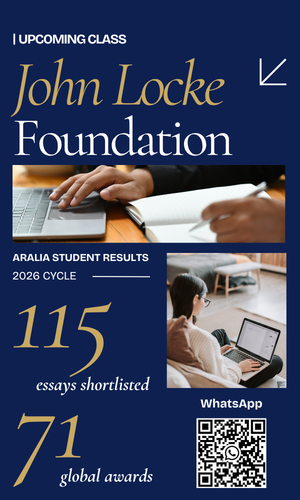
115 Aralia Students Named John Locke Essay Competition 2026 Shortlists!
With instruction from faculty in leading universities, Aralia’s international competition preparation programs have helped thousands of students worldwide pursue academic excellence and earn recognition in prestigious international competitions.
3. Which Opportunity Offers Better Feedback and Writing Development?
Feedback From Writing Competitions
Most major writing competitions do not provide individual feedback to participants. For example, students entering the Scholastic Art & Writing Awards receive their results after judging, but they generally do not receive comments explaining the strengths or weaknesses of their submissions.
Even without direct feedback from judges, preparing for competitions can help students improve their writing. Working toward a deadline encourages students to develop their ideas, organize their arguments, and revise their drafts carefully. Competitions with specific prompts or judging criteria also challenge students to approach subjects they might not normally explore in school.
Since feedback is rarely provided after judging, students should consider asking teachers, writing mentors, or peers to review their work before submitting. An outside perspective can help identify unclear arguments, weaknesses in structure, or areas that need further development.

Feedback From Literary Magazines
Some literary magazines provide editorial feedback, giving students an opportunity to understand how editors evaluate their writing.
Editorial comments can be especially useful when revising creative writing. For instance, an editor might notice that a short story begins with an interesting conflict but that the main character’s actions become difficult to understand later in the narrative. This feedback gives the writer a specific issue to address in the next draft.
However, not all literary magazines provide this service. For students who want to improve through repeated drafting and revision, magazines that offer editorial comments may be particularly helpful. Those who prefer working toward clear judging criteria and deadlines may find writing competitions equally useful for developing discipline and writing skills.
4. Which Looks Better on College Applications?
How to Include Writing Competition Awards
Students who earn recognition in writing competitions can list their achievements in the Honors section of the Common Application, which allows up to five academic honors received during high school.
Some examples include:
- Scholastic Art & Writing Awards – National Gold Medal
- John Locke Global Essay Prize – Category Winner
- Bennington Young Writers Awards – First Place, Fiction
When choosing which awards to include, students should prioritize their most significant achievements and indicate whether the recognition was at the school, regional, national, or international level.
A national writing award can help demonstrate that a student’s work has been recognized beyond their school. However, regional awards are also worth including, particularly if they represent an important accomplishment in an area the student hopes to pursue further.
How to Include Literary Magazine Publications
Students who have published their writing in literary magazines can also highlight these achievements in their college applications. Depending on the circumstances, publications may be included in the Activities section, Honors section, or Additional Information section.
For example, a student who regularly writes short stories and has published several pieces might list creative writing as an extracurricular activity and mention their most notable publications in the description.
Students who serve as editors for a school literary magazine can describe their editorial responsibilities in the Activities section. These might include reviewing submissions, providing feedback to writers, selecting pieces for publication, or helping organize an issue.
Editorial experience can be particularly interesting to colleges because it shows how students apply their writing and analytical skills beyond their own work. It can also demonstrate collaboration and commitment to a school community.
5. How Should You Choose?
Consider Writing Competitions If You:
- Enjoy writing in response to specific prompts and working toward deadlines.
- Want to challenge your writing skills through formal judging.
- Hope to earn regional, national, or international recognition.
- Have a polished piece that fits a competition’s categories and requirements.
- Are interested in writing-related awards or scholarships.
Writing competitions are particularly suitable for students who enjoy having a clear goal to work toward. Preparing for a competition also encourages students to spend more time revising their work, especially when they need to meet specific judging criteria and submission deadlines.
Consider Literary Magazines If You:
- Want to have your poems, stories, or essays published.
- Enjoy creative writing and developing your own ideas outside school assignments.
- Are interested in learning how literary publications select and edit submissions.
- Want to receive editorial feedback, where available.
- Hope to build a collection of published work over time.
Literary magazines may be a good starting point for students who already write independently and want to share their work with readers outside their school. Since different magazines publish different genres and styles, students can also explore publications that match their writing interests.
Can You Participate in Both?
Yes! Students interested in writing can certainly pursue both competitions and literary magazine publications, as long as they follow each organization’s submission rules. For example, preparing for Scholastic gives students a chance to refine their work according to the competition’s judging criteria, while submitting to a literary magazine introduces them to the editorial process and, in some cases, provides feedback they can use for future writing.
However, students should prioritize the quality of their submissions rather than the number of competitions or magazines they enter. Taking time to revise a strong piece, research suitable opportunities, and follow submission requirements carefully is often more worthwhile than sending unfinished work to multiple places.

Aralia Students Are 4x More Likely to Publish a Research Paper
Prepare for Writing Competitions With Aralia Education
Writing competitions give students an opportunity to challenge themselves beyond regular classroom assignments. They also require careful preparation, especially when students are learning to develop original ideas, organize longer pieces, or revise their writing for a specific audience.
Aralia offers writing classes, writing competition preparation programs, and an Academic Writing Lab to help students strengthen their writing skills.
Through personalized instruction and feedback, students can work on creative writing, essay development, literary analysis, and the revision process.
In 2026, Aralia students received 142 awards in the Scholastic Art & Writing Awards.
Whether you are preparing your first competition submission or working on a more advanced writing portfolio, Aralia’s instructors can help you develop the skills needed to approach challenging writing assignments with greater confidence.