

Anne Carson, winner of the 2026 Nobel Prize in Literature, is a Canadian poet, essayist, translator, and classicist whose work frequently draws on ancient Greek literature, mythology, and language.
Carson’s career shows how the study of Classics can extend beyond traditional academic paths, connecting ancient languages and literature with creative writing, literary analysis, and the broader humanities. The article also explores the benefits of studying Latin and introduces Aralia’s Latin and National Latin Exam (NLE) pathway.
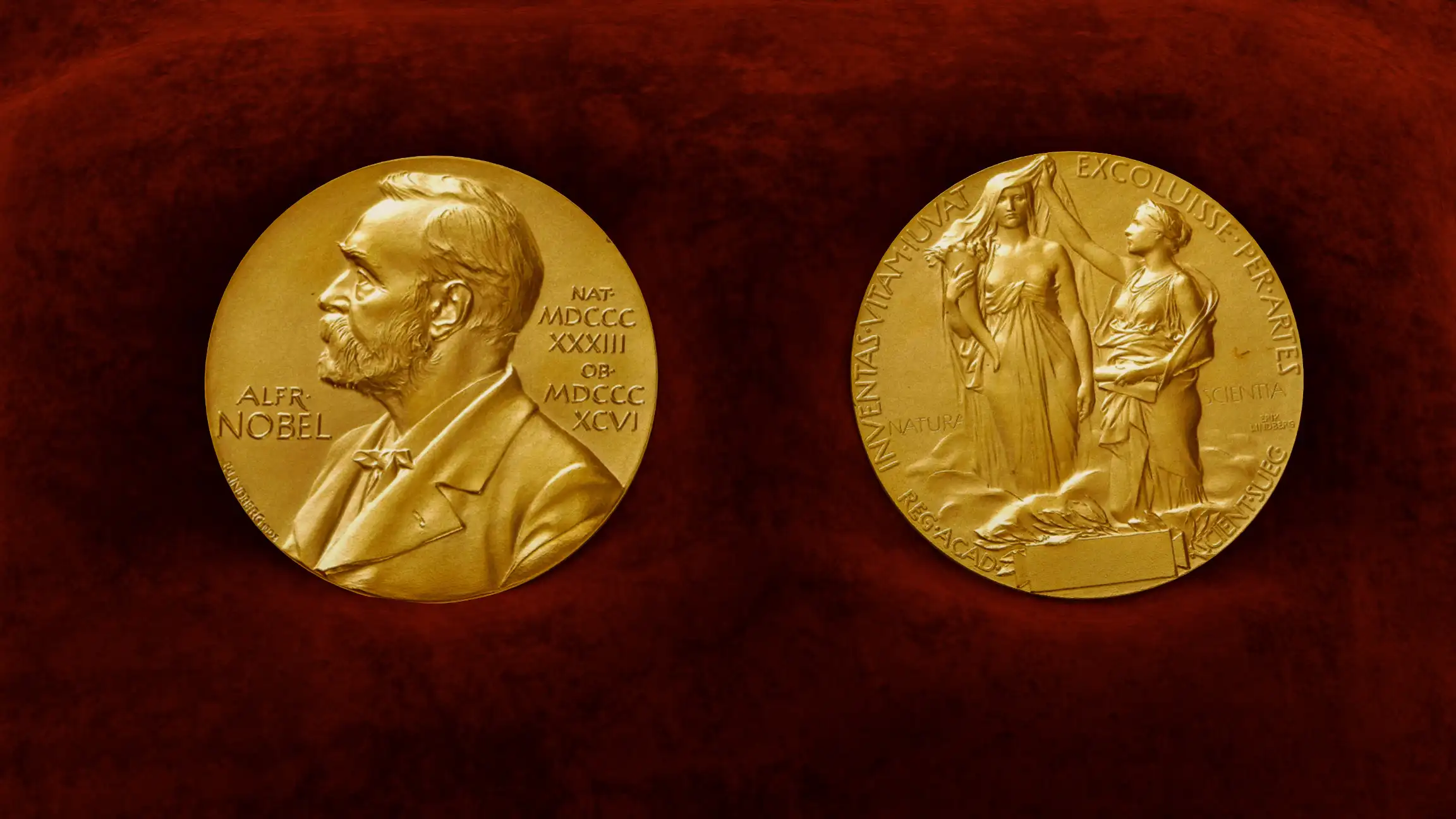
On October 8, 2026, Canadian poet, essayist, translator, and classicist Anne Carson was awarded the Nobel Prize in Literature. The Swedish Academy praised her “bold and inventive oeuvre” and her “playful dialogue with the classical tradition,” recognizing the way she brings ancient literary traditions into new forms of contemporary writing.
Carson’s story is particularly interesting for students interested in literature, languages, history, and the humanities. Classics became an important part of her academic and creative life. She earned her bachelor’s, master’s, and doctoral degrees in Classics from the University of Toronto and later taught Classics at Princeton University, as well as other universities.
Her career offers a compelling example of how an interest in ancient languages and literature can lead in unexpected directions. Rather than leaving the classical world behind, Carson continued to bring ancient texts, myths, and ideas into her work as a writer and translator.
From a High School Latin Class to the World of Ancient Greece
Carson’s interest in Classics began with a high school Latin class. According to the Poetry Foundation, one of her Latin teachers agreed to teach her Ancient Greek during lunch. That experience sparked an interest in Greek literature that would eventually shape her academic career.
Her path was not entirely straightforward, shifting between graphic arts and Classics. Carson enrolled at the University of Toronto but left twice before returning to pursue Classics. During one of those periods, she explored graphic arts at Humber College. She eventually returned to university and earned her B.A. in 1974, M.A. in 1975, and Ph.D. in 1981 from the University of Toronto. She also spent part of her master’s studies at the University of St Andrews in Scotland.
What began with a high school language class eventually developed into advanced study of ancient literature and a career in Classics. Carson’s path is also a reminder that students do not always know where an early academic interest will lead. Sometimes, a subject that initially catches their attention can become the foundation for much broader intellectual and creative work.
Ready to Master Latin Like a Scholar?
How Classics Shaped Carson's Writing
Carson’s Classics background did not remain separate from her literary career. Her knowledge of ancient Greek language and literature became part of the way she approached writing, translation, and storytelling.
Her work moves between poetry, prose, essays, and translation, often combining several forms in unexpected ways. This genre-crossing quality is one reason the Swedish Academy highlighted her ability to move between classical and modern traditions.
Carson often uses ancient stories as a starting point for asking new questions. She takes material from the ancient world and places it in unfamiliar settings, allowing readers to see familiar themes such as love, identity, conflict, and loss from a different perspective.
How Ancient Greek Mythology Became Modern Literature
Autobiography of Red draws on fragments of the ancient Greek poet Stesichorus and reimagines the myth of Geryon, the red-winged monster associated with Herakles. Carson transforms this ancient figure into a modern teenage boy navigating love, heartbreak, and identity.
Working on the book, Carson works from an incomplete ancient source and reinterprets it for a contemporary audience, connecting a story from thousands of years ago with experiences that remain recognizable today. This kind of work requires students to look beyond the surface of a text. They need to consider language, historical context, different interpretations, and the relationship between an original work and its later adaptations.
These are some of the same skills that make Classics valuable for students today: close reading, careful analysis, contextual thinking, interpretation, and clear communication.
Why Study Classics Today?
Anne Carson’s career offers one compelling example of where a background in Classics can lead. But students do not need to become professional classicists to benefit from studying the ancient world.
Classics brings together language, literature, history, philosophy, mythology, and culture, giving students the opportunity to approach the humanities from multiple perspectives. Studying Latin or Ancient Greek, in particular, requires students to pay close attention to vocabulary, grammar, sentence structure, and context. Over time, these practices can strengthen skills that are useful well beyond language class.
Build Latin Mastery with Proven Results
1. Develop close reading and analytical skills
Translating and interpreting classical texts requires students to examine individual words and sentence structures carefully. Besides looking for the general meaning, students should learn to ask why a particular word was chosen, how ideas are connected, and how meaning changes with context.
2. Build a stronger understanding of language
Latin and Ancient Greek have influenced many English words and continue to appear in fields such as medicine, science, law, and philosophy. Studying their vocabulary and word formation can help students recognize connections between words and develop a deeper awareness of how language works.
3. Explore literature, mythology, and history together
A single classical text can open the door to questions about politics, religion, philosophy, society, and human behavior. Students can see how ancient ideas have influenced later writers and how stories such as Greek and Roman myths continue to appear in modern literature, film, and popular culture.
4. Strengthen academic writing and interpretation
Beyond memorizing vocabulary and historical facts, through classics, students regularly interpret primary sources, compare perspectives, evaluate evidence, and develop arguments. These skills can transfer to literary analysis, research papers, history assignments, essay competitions, and other forms of academic writing.
5. Develop an interdisciplinary perspective
One of the greatest strengths of Classics is its breadth. A student might begin with Latin grammar and eventually become interested in ancient history, mythology, philosophy, archaeology, literature, or art. This makes Classics particularly valuable for students who enjoy connecting ideas across different subjects.
From Latin to Classics with Aralia's Latin Mastery Pathway
For younger students, studying the entire field of Classics can seem overwhelming; therefore, Latin can be a practical place to start. Students can begin with foundational vocabulary and grammar, then gradually explore Roman history, mythology, literature, and culture. As their language skills develop, they can move toward more advanced texts and broader questions about the ancient world.
Our program begins with a strong academic focus and then incorporates preparations for competitive exams and strategies to bolster college applications.
6-Level System
Each level is designed to align with the curriculum of the top 10 private schools in the U.S. and the difficulty levels of the National Latin Exam (NLE).
Level | Learning Goal |
Level 1 | Foundations in Latin – Complete the Latin 1 course and prepare for the NLE Beginner/Elementary exam. |
Level 2 | Core Grammar and Vocabulary – Complete the Latin 2 course and prepare for the NLE Intermediate exam. |
Level 3 | Reading and Interpretation – Complete the Latin 3 course and prepare for the NLE Intermediate Reading exam. |
Level 4 | Prose Analysis and Composition – Complete the Latin 4 course and prepare for the NLE Advanced Prose exam. |
Level 5 | Poetry and Literary Techniques – Complete the Latin 5 course and prepare for the NLE Advanced Poetry exam. |
AP Latin | Exam Preparation and College-Level Latin Mastery – Prepare for the AP Latin exam and NLE Advanced Reading exam. |
Our Teachers
Our Latin instructors bring a wealth of experience in academic instruction and competitive coaching. With a proven track record of guiding students to excellence, they combine deep subject expertise with strategic mentorship—preparing students to master the language and excel in high-level competitions and academic pursuits.