

Due to a lack of national standards for high school history curricula, American high school history curricula vary greatly between schools. These variations are largely driven by state mandates, though there have been efforts such as the National Standards for United States History and Common Core (for ELA/Math/History literacy).
However, in most high schools, the sequence often begins with the vast expanse of world history, narrows into the complexities of American development, and concludes with modern governance and economics.
At Phillips Academy Andover, for example, the History & Social Science curriculum for grades 9–12 is structured with required courses. Incoming four-year students must complete seven terms of departmental study, starting with World History, diving deeper into selective topics within World History, and US History to fulfill the department’s graduation requirement. Students may also enroll in AP History courses to prepare for Advanced Placement exams or deepen their understanding of these topics.
1. 9th Grade: World History
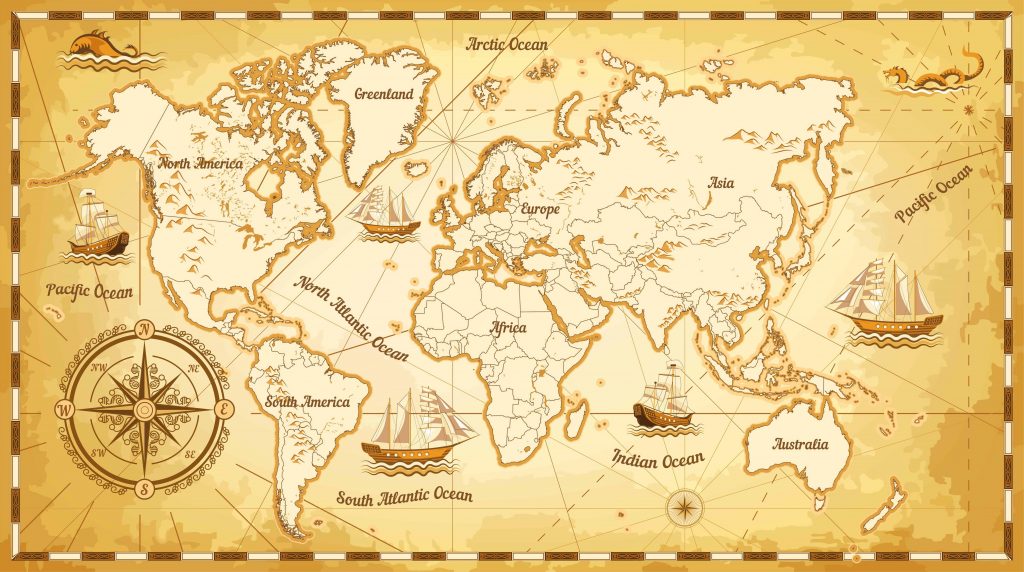
It is a foundational course in World History, typically taken in the 9th or 10th grade, that provides a broad global context. Students will study a chronological timeline from ancient times, covering the rise of river valley civilizations and Classical Greece and Rome, and then progress to the modern period, including several conflicts such as the Cold War. Another approach to World History is to adopt a modern scope, focusing primarily on 1200 CE to the present, and to explore interconnected themes, such as the rise of empires, global trade networks, and industrialization.
History courses at grades 9 and 10 are generally considered to have a moderate to low level of difficulty. The content is broad, so the main challenge is understanding major trends and patterns across continents rather than specific details. Students are advised to focus on these patterns, make connections, and comparisons. Their historical writing foundation relies on developing a clear thesis statement.
Improve Your Grades Within One Semester
2. 10th to 11th Grade: U.S. History
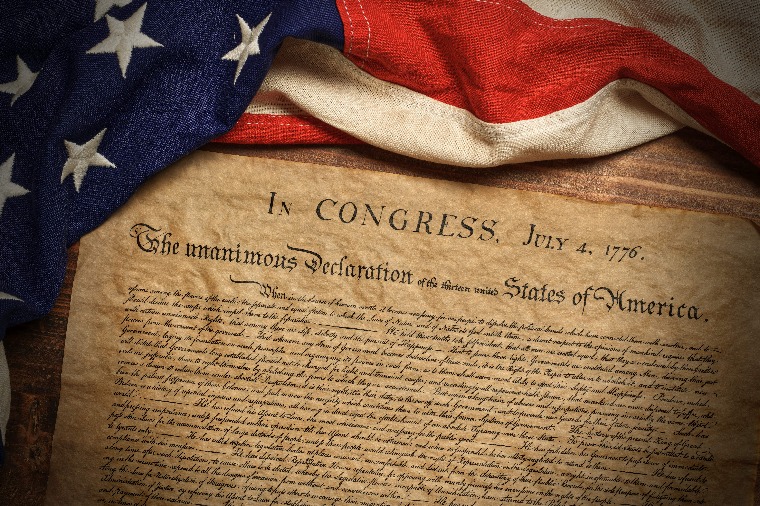
Its focus is narrowed down to the development of the United States in the required History course taken in the 10th or 11th grade. The curriculum delves into the colonial period through the present, with a strong emphasis on:
- The American Revolution and the Founding Documents (Constitution, Declaration of Independence)
- Westward Expansion, the Civil War, and Reconstruction.
- Industrialization, the Gilded Age, and the Progressive Era
- The U.S. in the World Wars, the Great Depression, the Cold War, and the Civil Rights Movement
- Contemporary U.S. issues, politics, and culture.
This class has a medium-high difficulty level, as students are expected to move beyond facts to analyzing why it happened using primary sources, such as letters, maps, and political cartoons. Success in this relies on a student’s ability to organize massive amounts of information into a cohesive timeline of cause and effect. You can familiarize yourself with the increasing volume and complexity of materials to prepare for the History class in grade 10 through Aralia. We offer an Introduction to US History course, designed to build a solid foundation for students who want to achieve confidence in their historical analysis before facing the heightened pressure of junior year.
3. 11th Grade: AP United States History/AP World History

Students in the 11th grade fulfill their history requirements through AP United States History (APUSH) and AP World History, which provide the first true experience with college-level academic standards. These courses are challenging because they require high-level historical thinking skills such as document analysis and synthesis of complex themes.
In particular, APUSH is a deep dive into American identity, requiring students to consolidate complex themes such as federalism, social reform, and economic shifts from 1941 to the present. Meanwhile, AP World History covers global history from 1200 CE to the present, centering on major trends in culture, governance, economics, technology, and the environment, rather than merely memorizing dates, to understand how societies and the world have evolved through interactions, conflicts, and innovations.
The key to excelling at this is mastering specific historical thinking skills, such as contextualization and comparison. With increased difficulty, success in these AP courses depends on early, strategic practice and expert guidance to navigate the heavy workload. To bridge the gap between general school instruction and the demanding analytical skills required to excel on standardized exams, Aralia’s AP United States History and AP World History preparation classes are specifically designed for exam success, focusing on practicing essential skills in exam formats.
How to Prepare for the AP US History Exam: APUSH Comprehensive Study Guide
Aralia Students Are 4x More Likely to Publish a Research Paper
4. 12th Grade: AP United States Government and Politics

This program often finishes in AP United States Government and Politics during the senior year of high school. The main focus is on theoretical and legal frameworks of the American political system, which diverges from a purely historical narrative. Students explore the foundations of democracy through the U.S. Constitution and The Federalist Papers, while also analyzing contemporary interplay among the branches: legislative, executive, and judicial. The challenge is primarily analytical, since students must interpret data from polls and explain how specific Supreme Court rulings have shaped civil liberties. To succeed, seniors are encouraged to become active consumers of reliable news, as the ability to apply classroom concepts to real-world political developments builds a high-scoring student.
5. Advice for Aspiring Social Science Majors
Students planning to enroll in university majors such as Political Science, International Relations, or History require these high school classes in their transcripts. Beyond core requirements, taking electives such as AP Psychology or AP Macroeconomics can show admissions officers your genuine interest in understanding human systems. Furthermore, these classes are valuable for the transferable skills, such as source analysis and comparative thinking. By mastering these competencies, students arrive on campus equipped with the intellectual discipline necessary to succeed in any liberal arts or social science program.
For those specifically intending to pursue a History major in college, cultivating a deep foundational knowledge and mastering essential analytical skills right in high school is non-negotiable for future success. To help you map out your long-term academic path, be sure to check out our Guide to Choosing High School History Classes.
For a more in-depth look at the history curriculum since middle school, visit An In-Depth Look at American High School History Curriculum.
6. Aralia Education’s History Courses
Whether you are just beginning your high school journey or are preparing for the final challenge of college applications, Aralia offers a comprehensive academic roadmap tailored to every grade level. We offer a comprehensive curriculum of history courses that progress with you, ranging from foundational introductory classes for beginners to our AP Extended Programs designed for students seeking a competitive edge on exams and history competitions.
Explore our full catalog of History classes to find the perfect course for your next academic milestone!